10 min read
How to reduce food waste without meal planning
How to reduce food waste at home with no meal plan: pick each dinner by what goes off first, keep an eat-first shelf, and shop for the nights you cook.
Read the articlePractical writing about saving recipes, cooking from what you already have, and getting dinner on the table without a browser full of open tabs.
How to reduce food waste at home with no meal plan: pick each dinner by what goes off first, keep an eat-first shelf, and shop for the nights you cook.
Read the articleGetting recipes out of TikTok, Instagram, YouTube, websites, cookbooks and handwritten cards, then keeping them in order.

Translate any saved recipe into English, French, Spanish, Italian, German, Portuguese, Japanese or Chinese, with every amount and oven temperature kept.
Facebook's save button keeps a link, not a recipe. How to get a recipe out of a Facebook post, reel or group and into a form you can cook from.
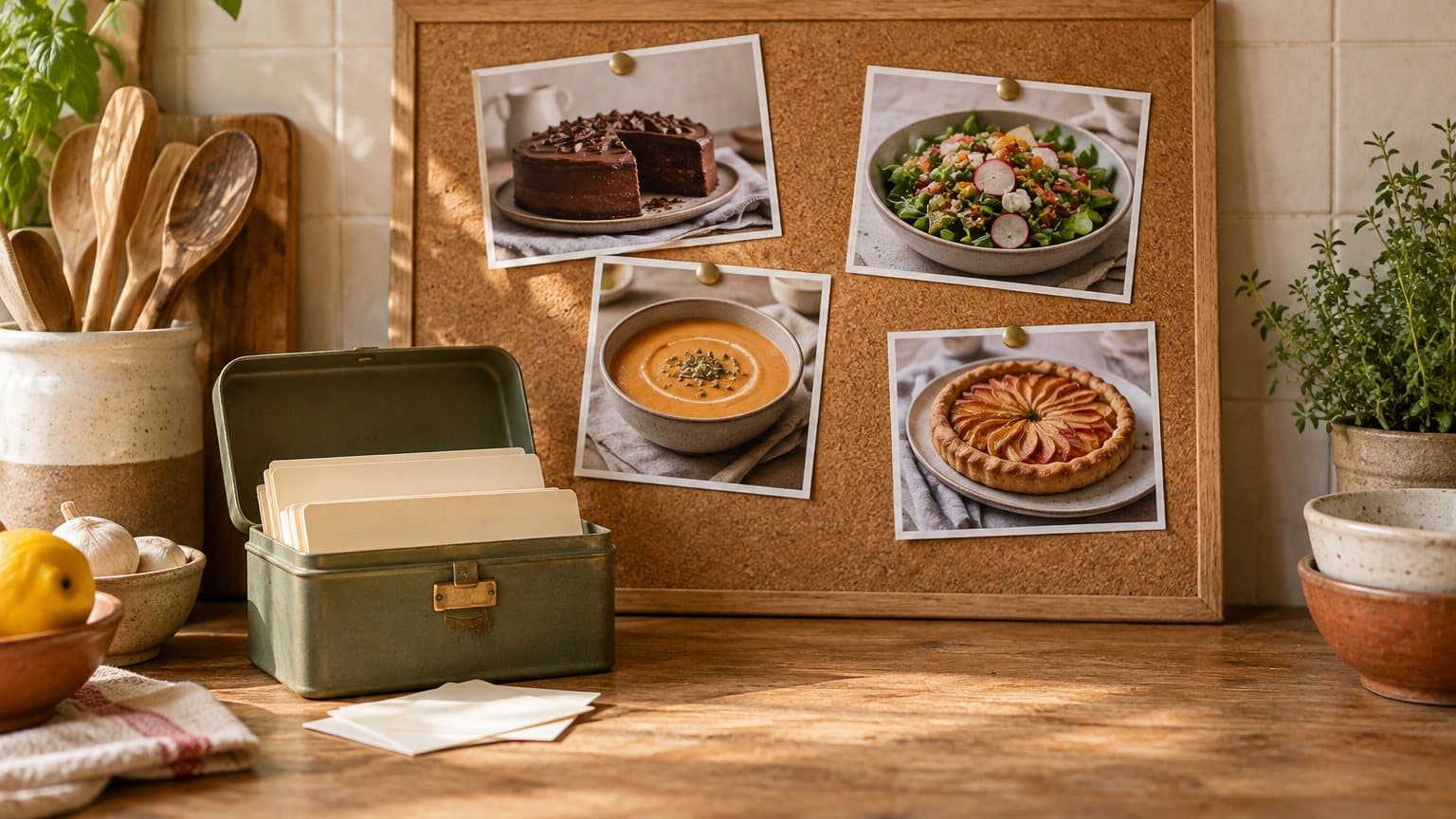
A Pinterest board saves pictures of recipes, not the recipes. How to get from a pin to the actual ingredients and steps, and keep them when the link breaks.
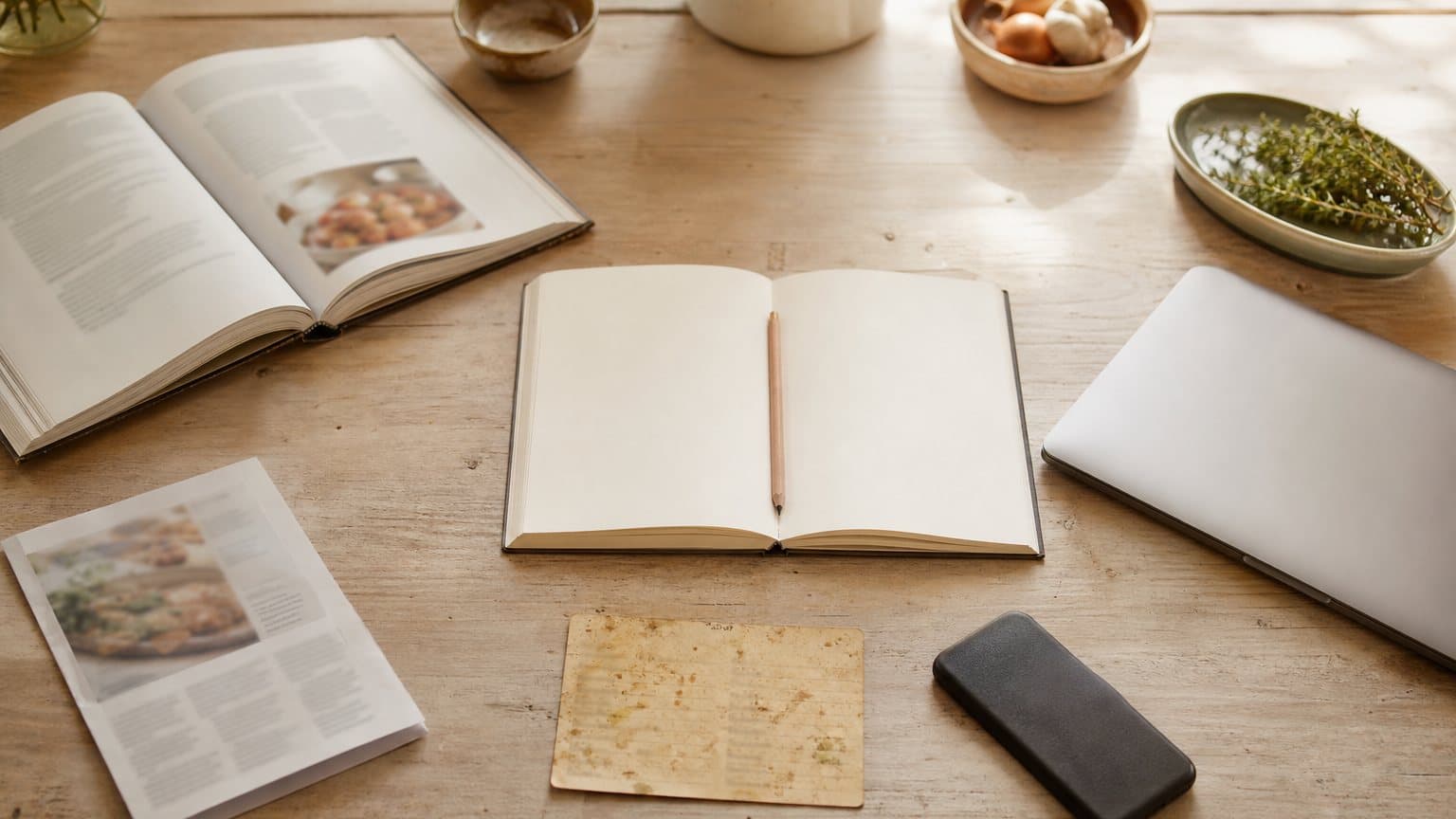
Import recipes from websites, TikTok, Instagram, YouTube, photos, Notes and other recipe apps: what works, how deep each one reads, and what doesn't yet.
The popular recipe apps compared side by side, and what to use when one shuts down or stops fitting.
Plans that hold up past Tuesday, and shopping lists you don't have to rewrite.
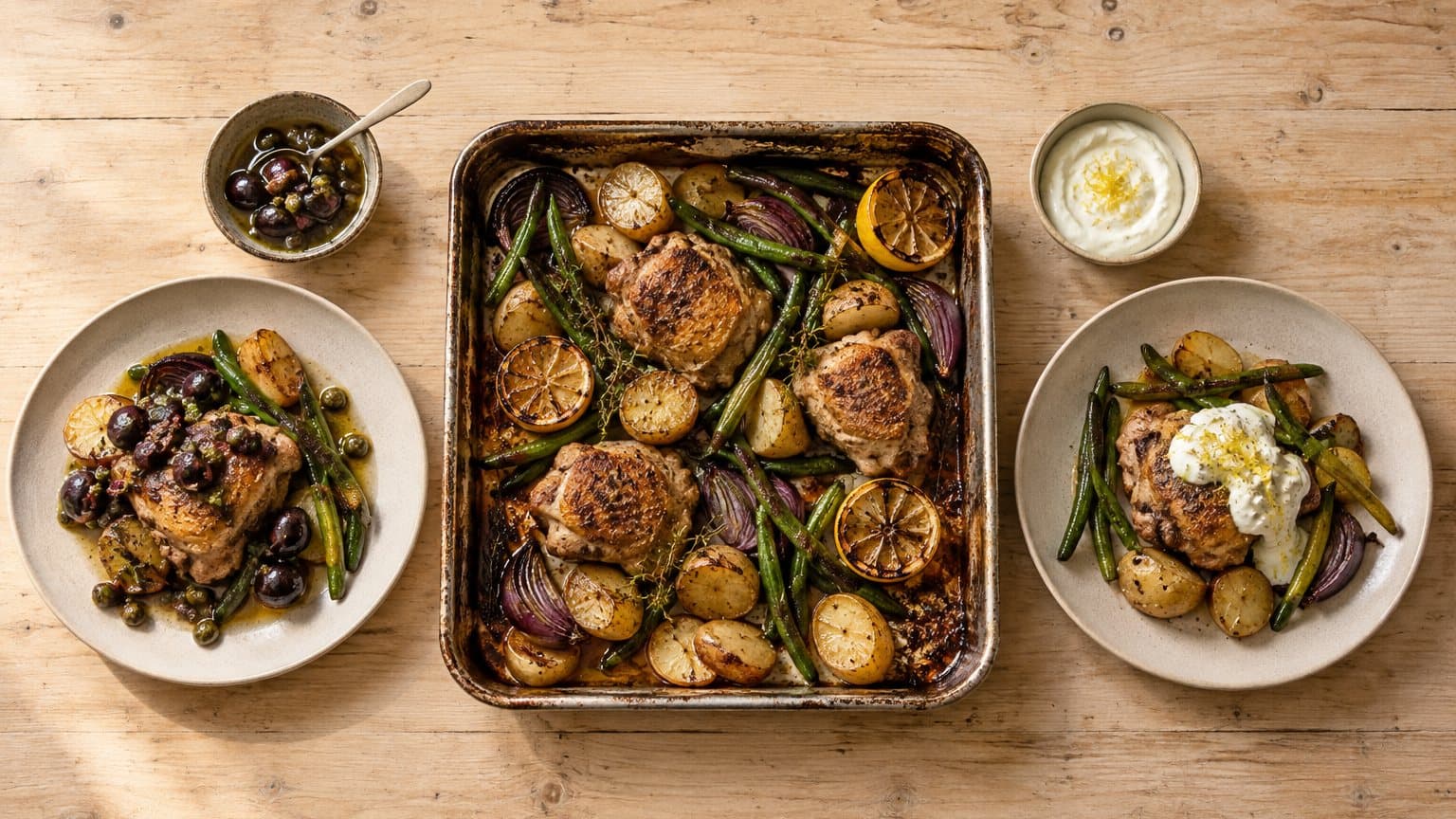
Two people rarely agree on whole dinners and almost always agree on ingredients. Plan the shared half, and let the rest join on the plate.
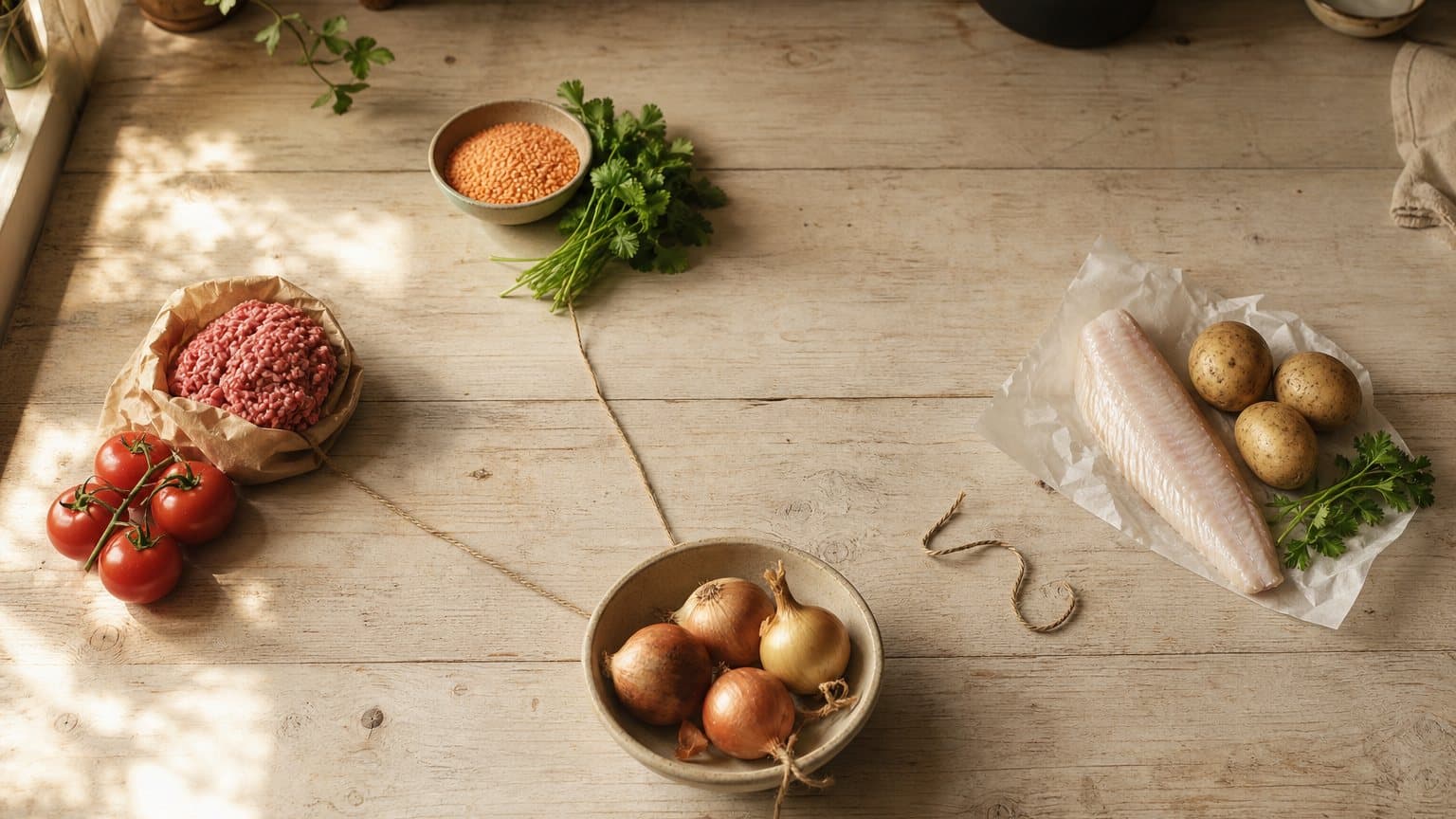
A list gets rewritten because it kept the answer and threw away the question. Keep the dinners, the headcount and the shelf, and the list keeps itself.
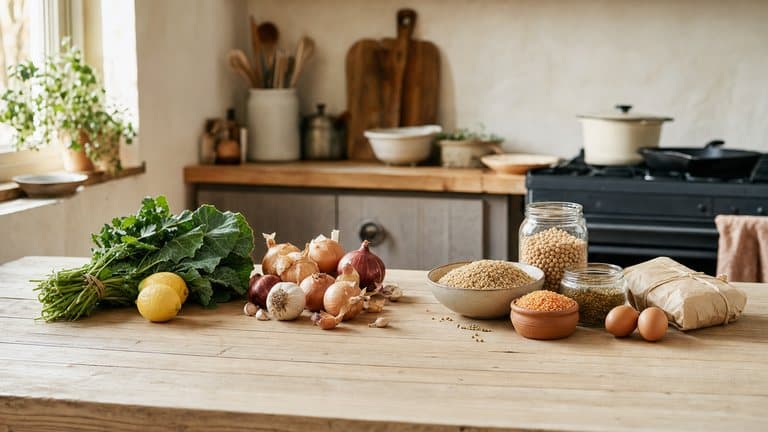
Most meal plans die on Wednesday. The fix isn't more discipline: it's planning fewer meals, in no fixed order, with the week's chaos already built in.
What to make with the food already in your kitchen, and the staples that make more of it cookable.
How to reduce food waste at home with no meal plan: pick each dinner by what goes off first, keep an eat-first shelf, and shop for the nights you cook.
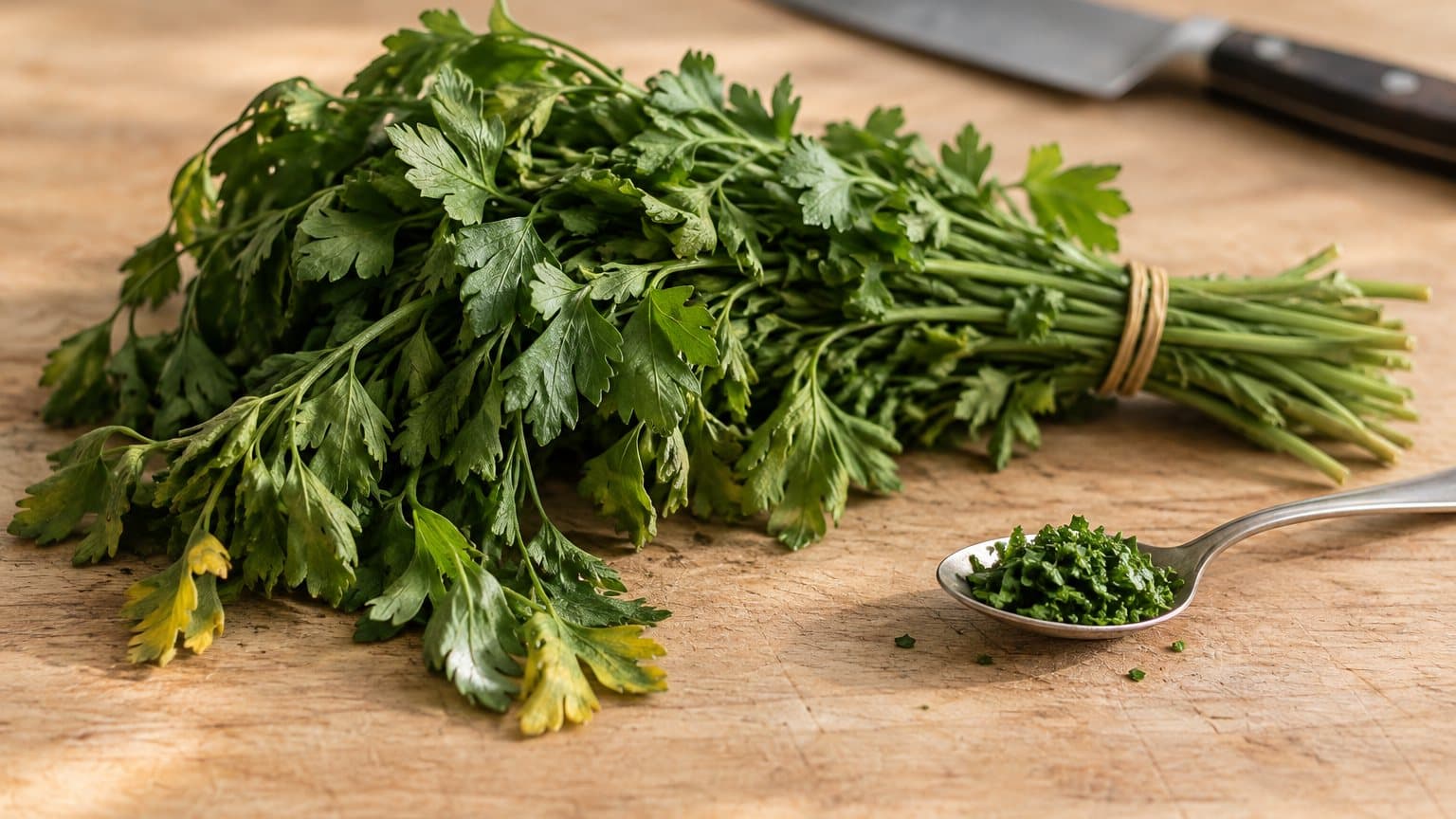
Herbs rot for an arithmetic reason: recipes ask for a spoonful and shops sell a bunch. The four dishes that finish a whole bunch at once.
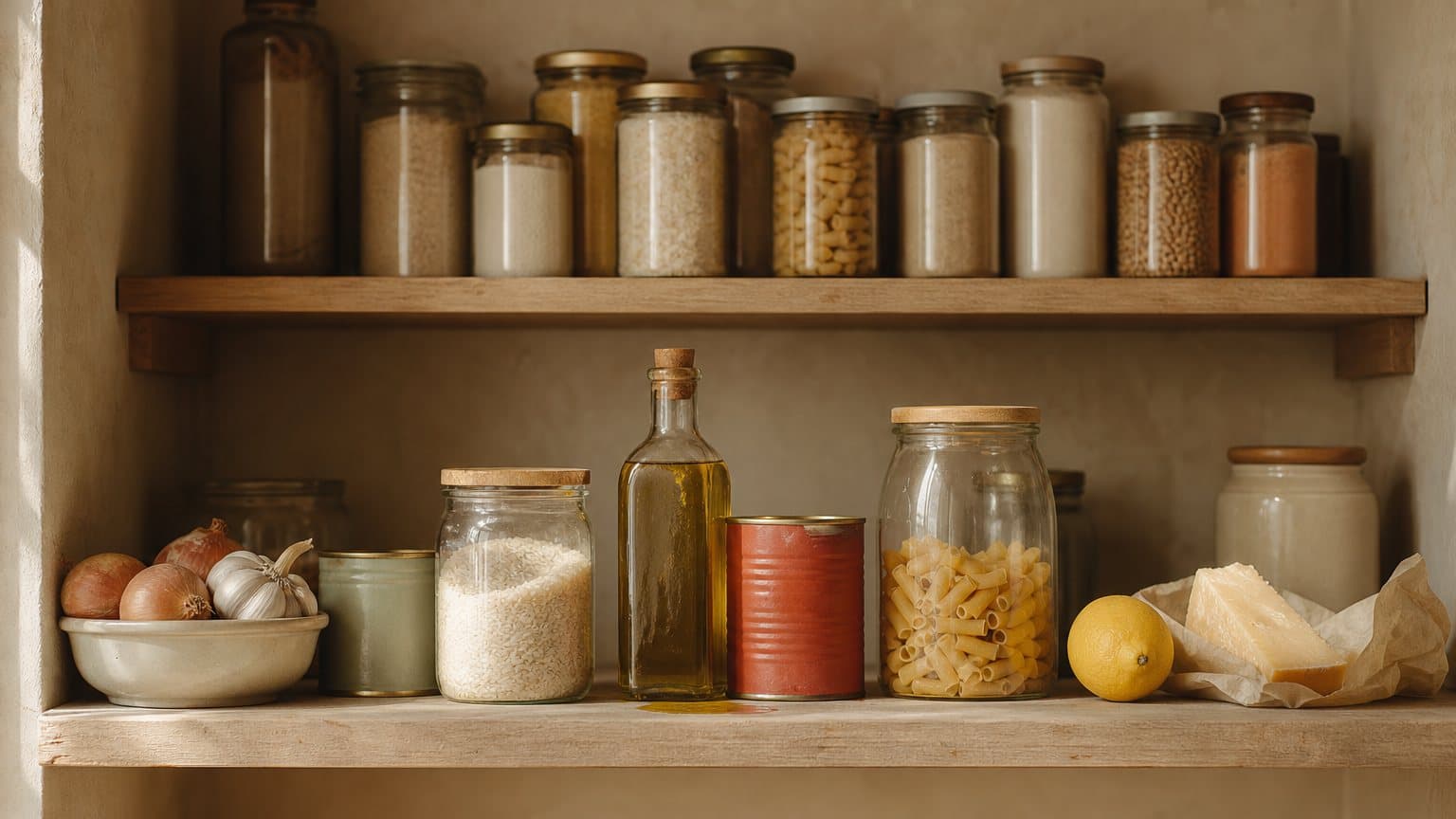
Twelve jars that turn up in dinners with nothing else in common, and the test that separates a real staple from something you bought for one recipe.
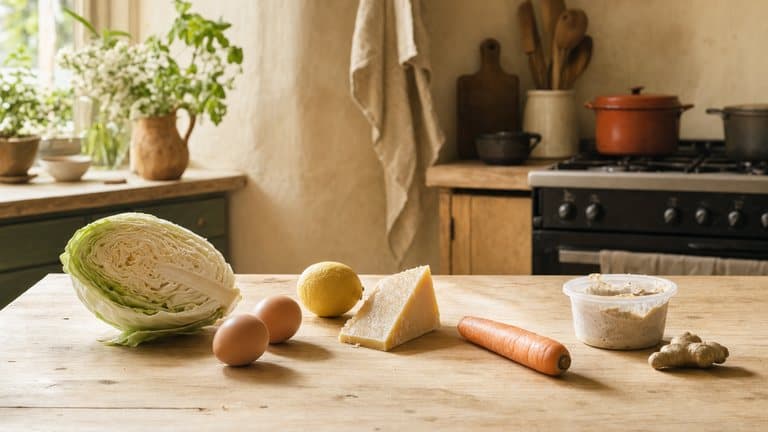
Cooking from the fridge is a skill, not a talent. A practical method for turning whatever is in your kitchen into dinner, and less food in the bin.
Hands-free cook mode, and cooking with friends and family in other kitchens.
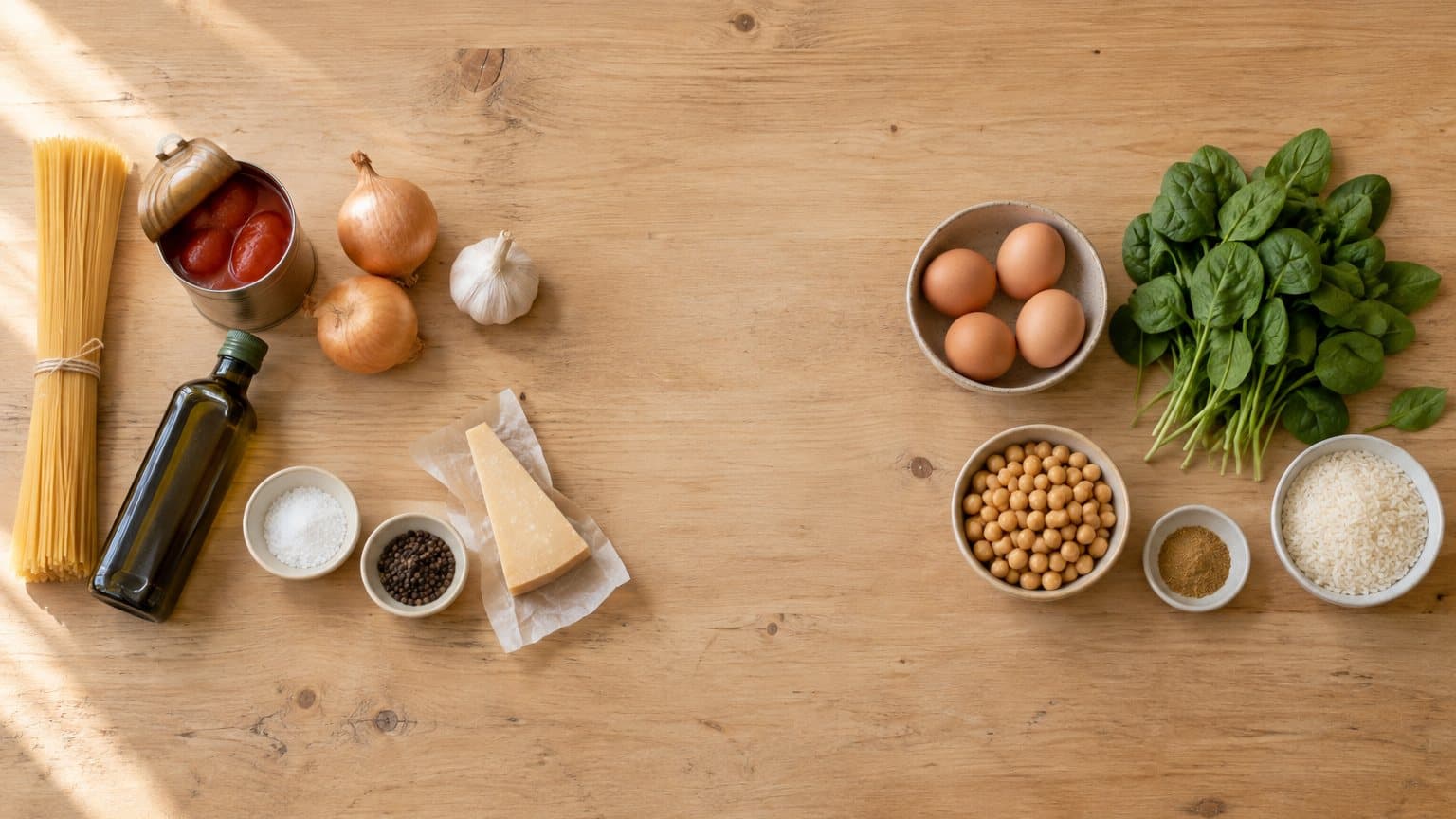
How to start cooking for yourself in an empty kitchen: what to cook first, what to buy, and why each dinner should use up what the last one left.
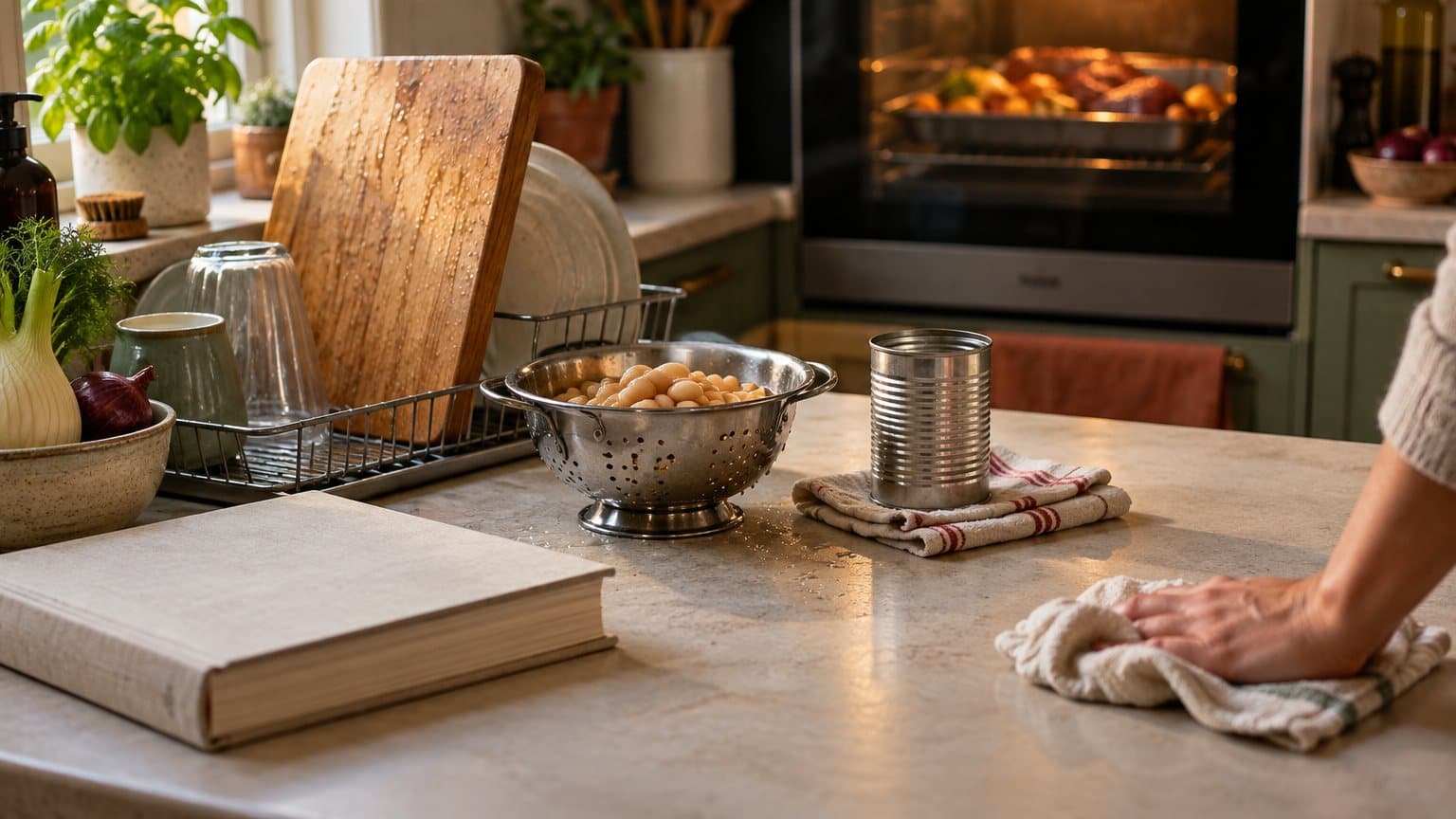
Recipe times count only the steps someone could time. Why prep time runs long, why 30-minute meals rarely take 30, and how to read a recipe before you cook.
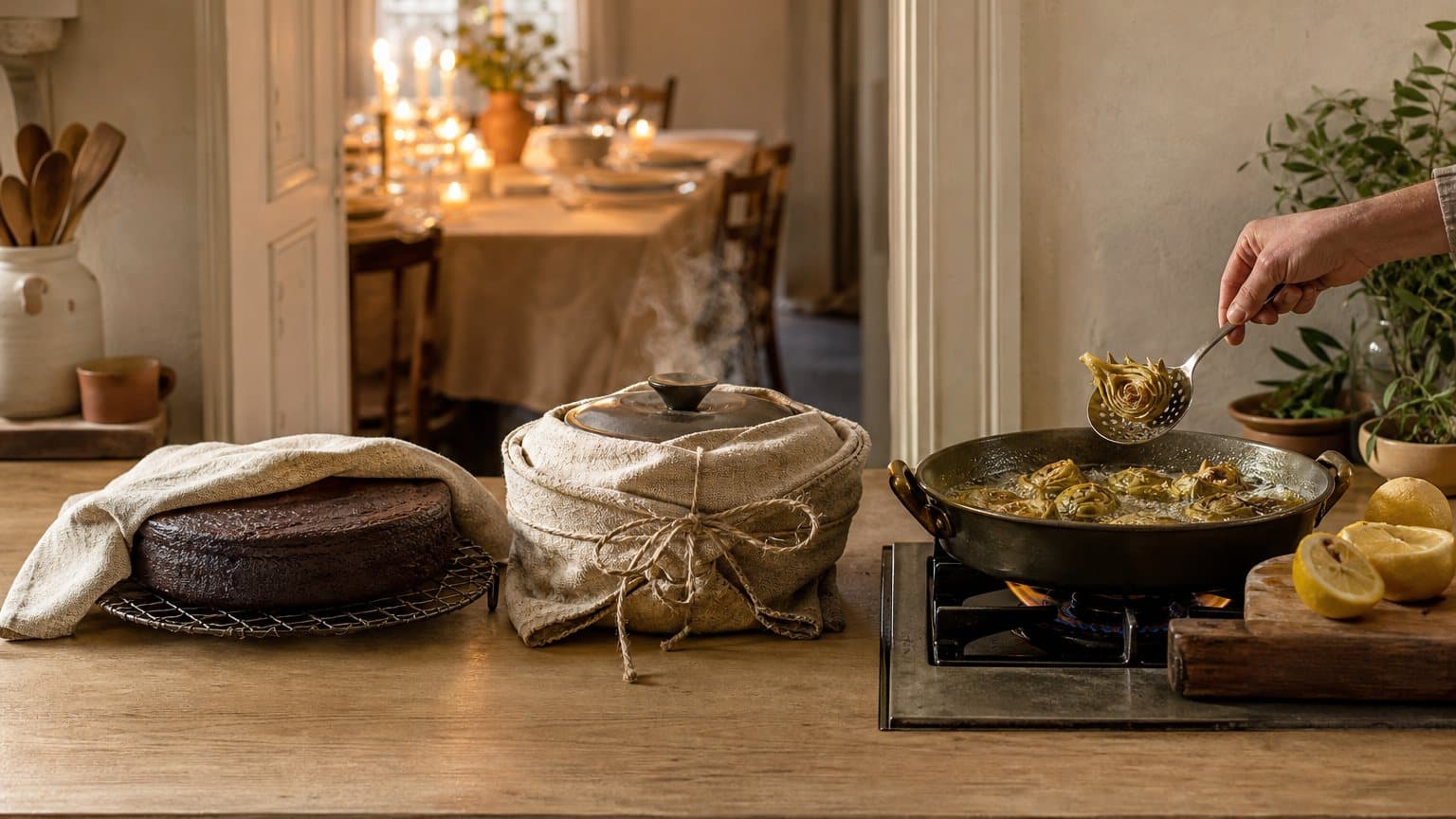
Three cooks, three courses, one table. The plan is in none of the three recipes, so here is how to build it backwards from the hour you eat.
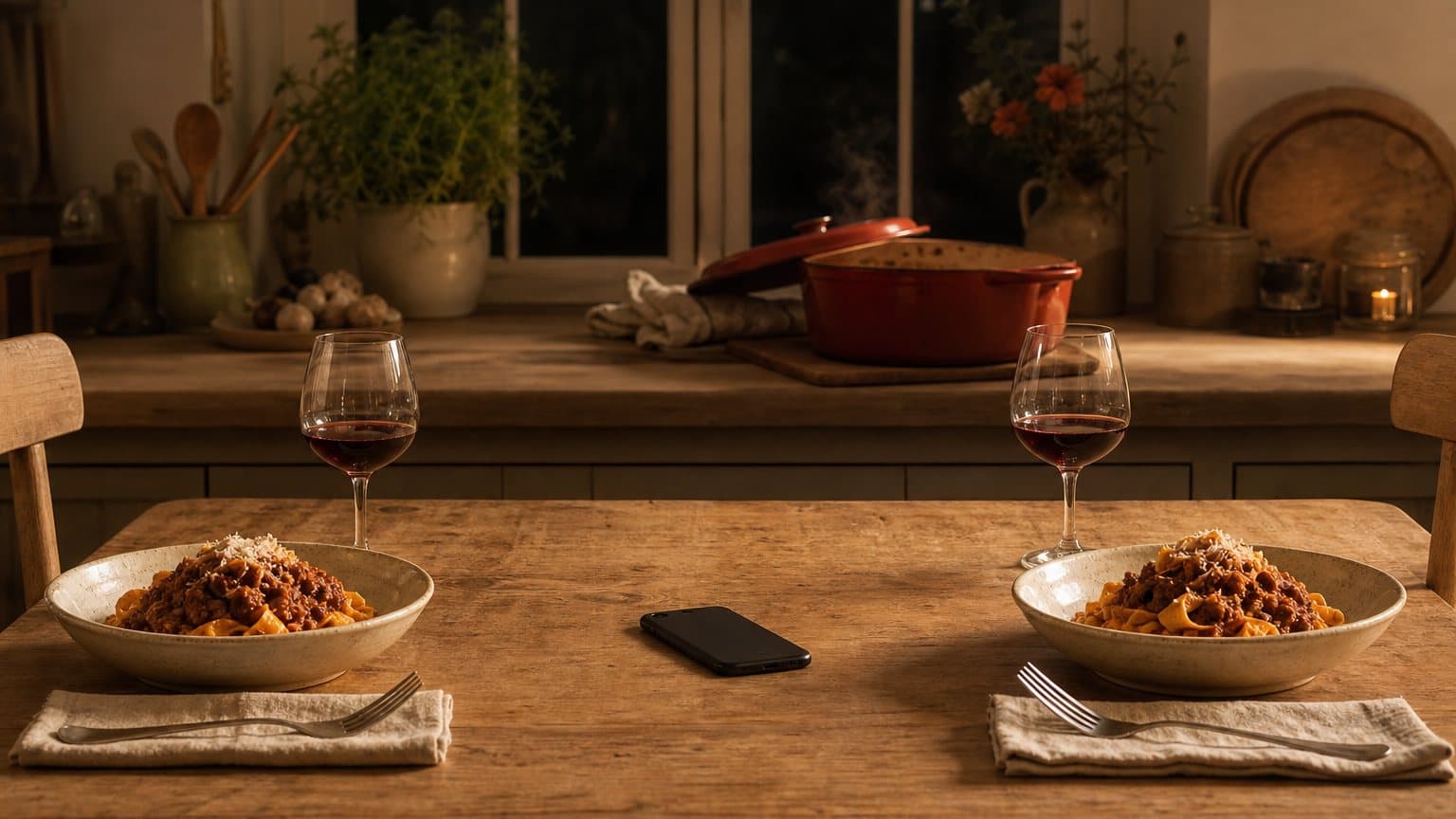
Cooking together at a distance fails for one reason: a video call carries the talk but not the pot. How to share the recipe itself instead.
New features and releases, explained.
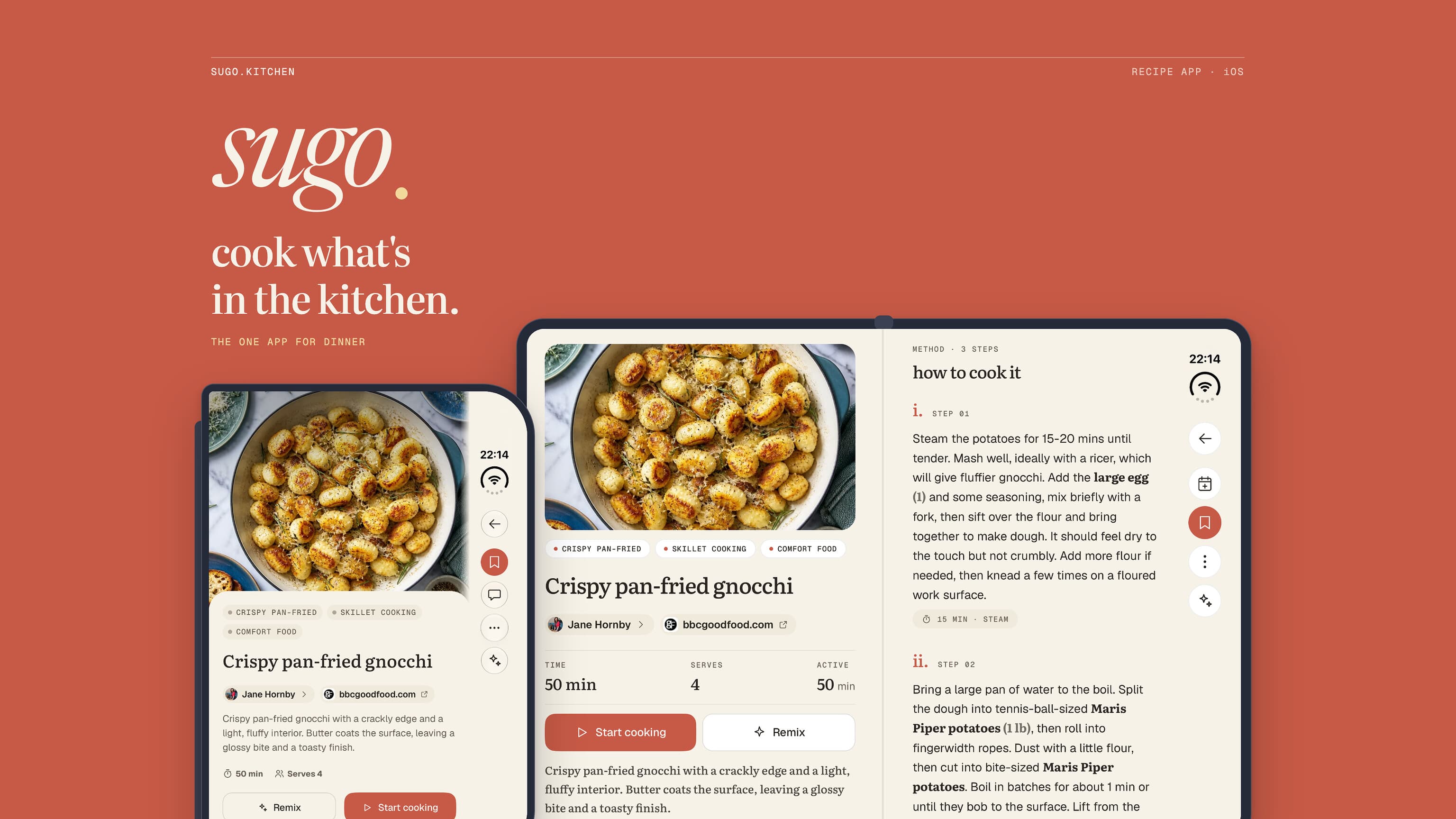
Sugo now supports iPhone Duo. Open it like a book and a recipe gets two pages: the ingredients on the left, the method beside them on the right.
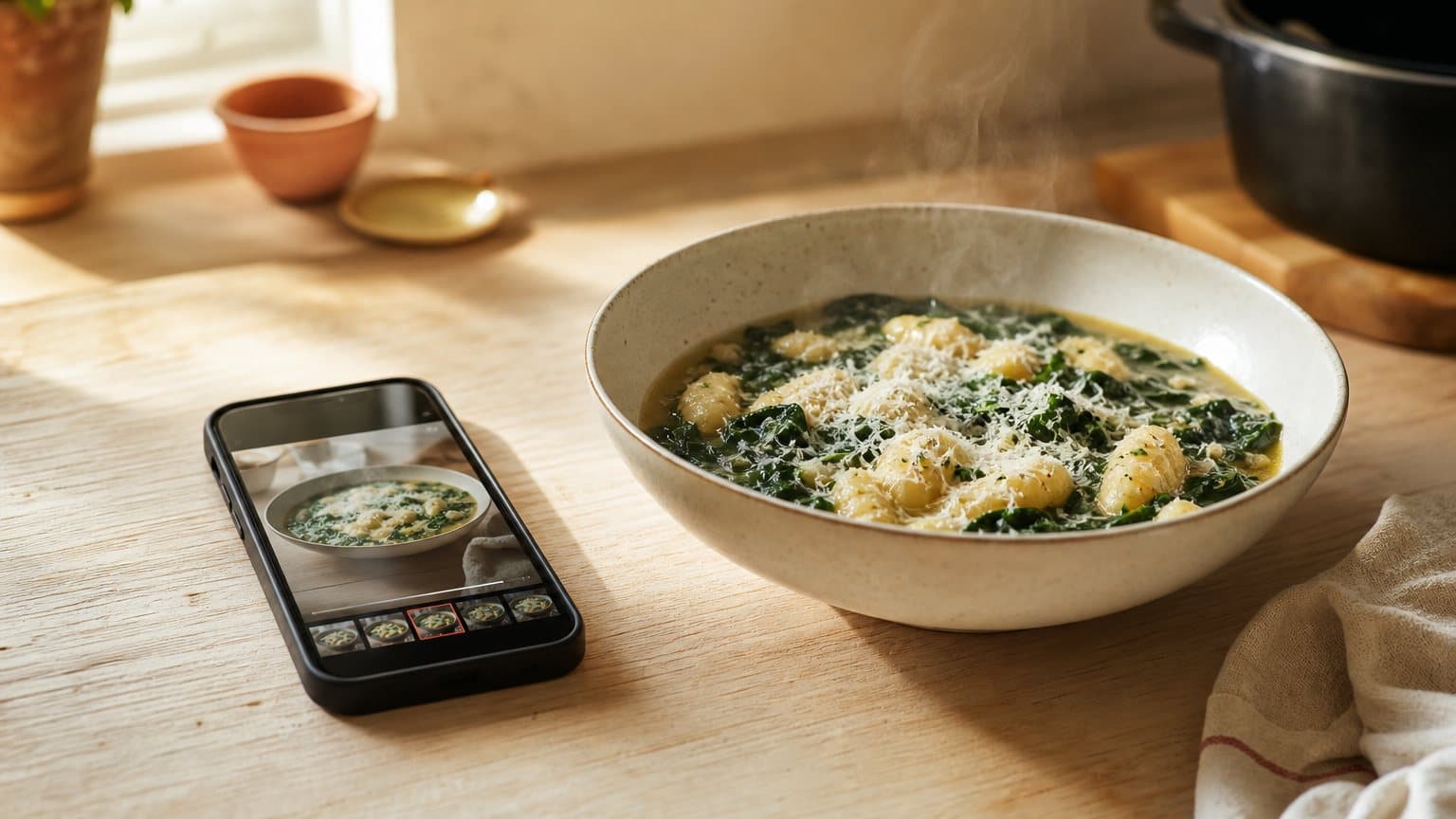
A recipe saved from a reel arrives with the post's thumbnail as its cover. Now you can scrub the original video and choose the frame you want instead.
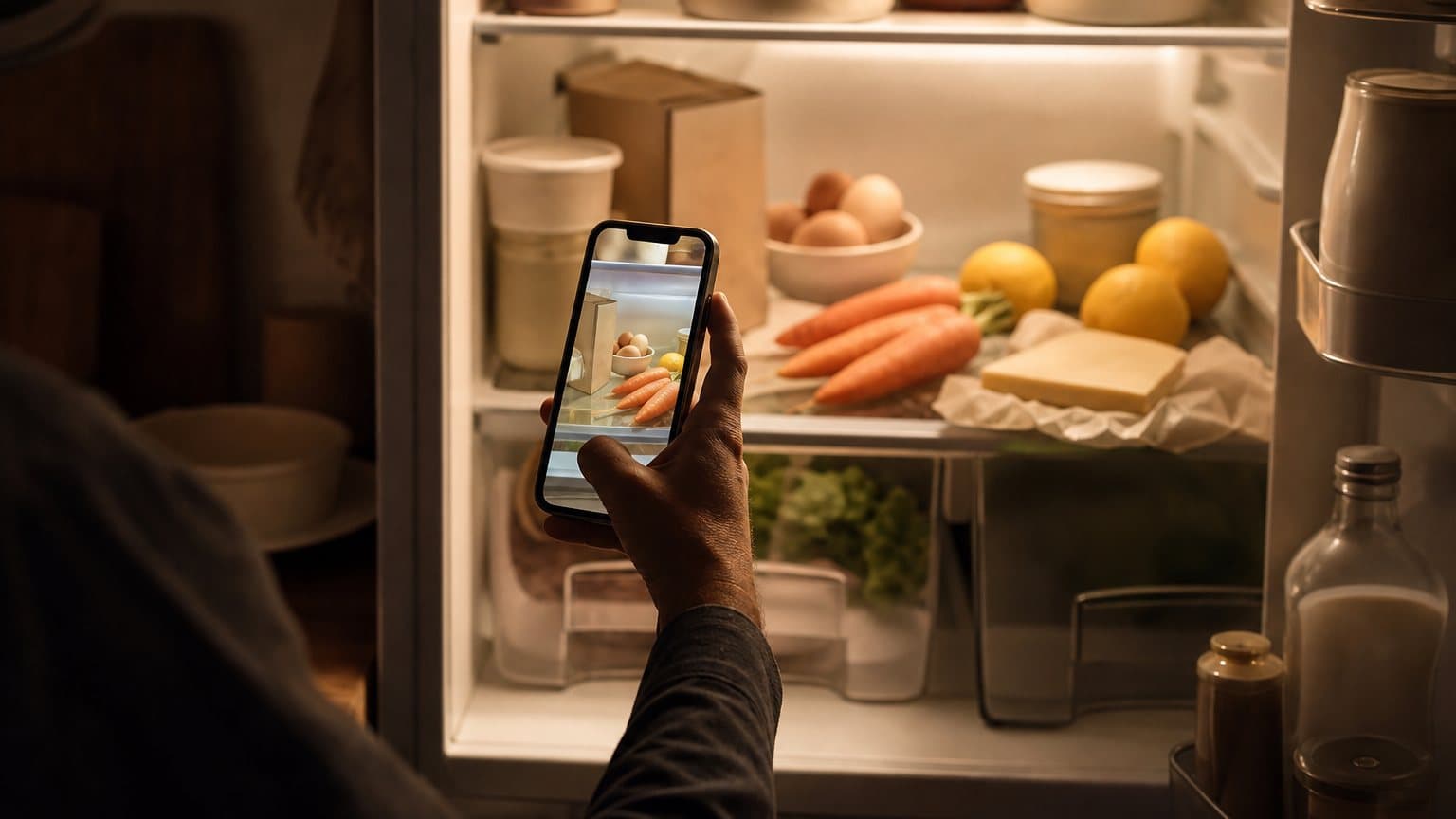
Sweep your phone along a shelf and Sugo lists what it sees, counting each item once. Hold up a pack and it reads the barcode. Frames stay on your phone.
Sugo is on iPhone, iPad, Mac, Android and the web. What version 1.0 does, what it costs, and what it still can't do.
Sugo is on the App Store for iPhone, iPad and Mac, on Google Play for Android, and in any browser at app.sugo.kitchen. It is free to start, so start saving the recipes you actually cook.