How to share a family recipe collection
Sending the recipes round as a PDF freezes them at one version. How to build a family collection that survives being cooked from and corrected.
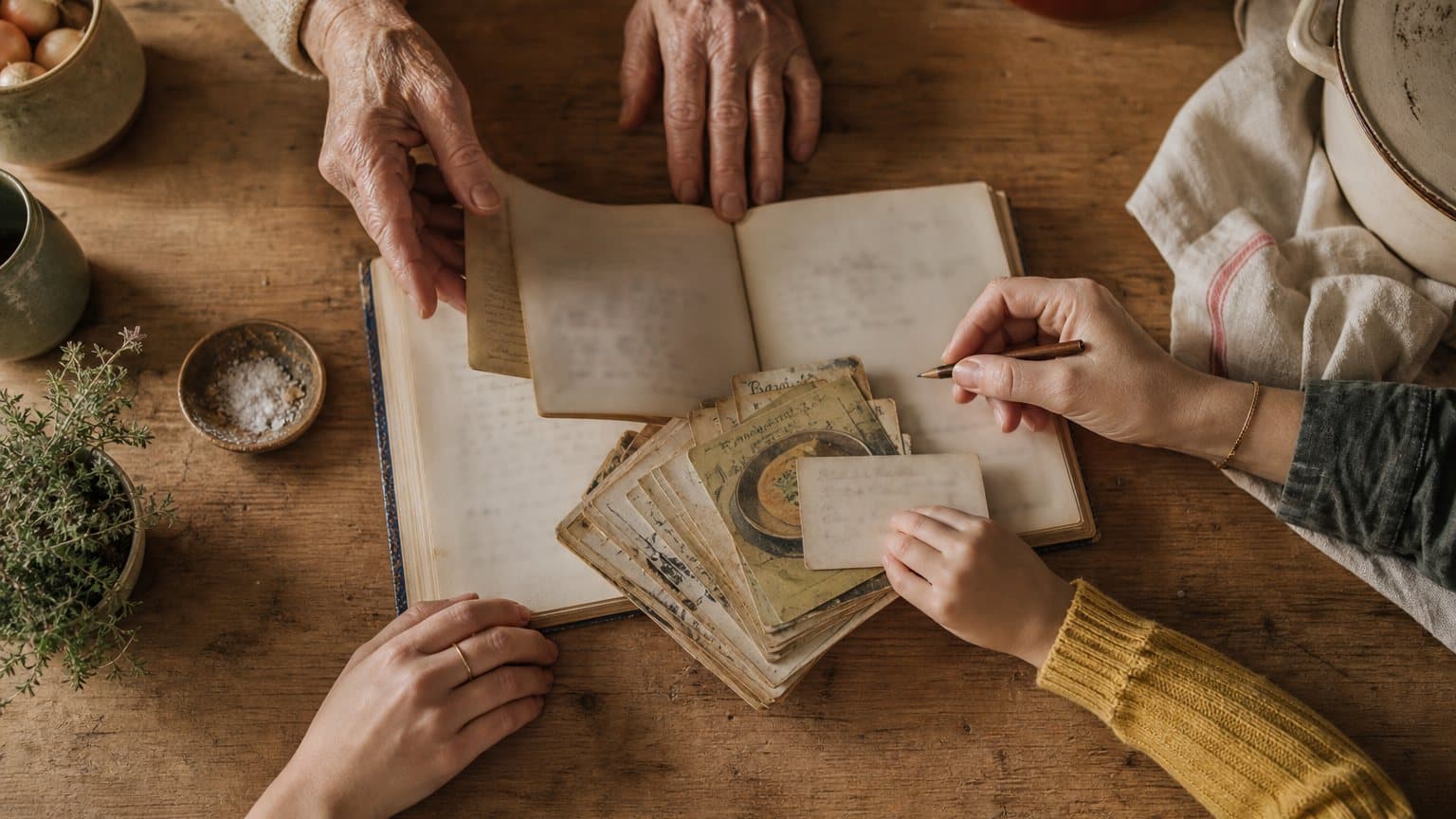
Put the recipes in one place more than one person can reach, get each one into text with real quantities, write down who it came from, then invite the family to that place. A shared cookbook does it. So does a shared folder, a shared album, or anything with more than one copy in more than one house.
What does not do it: a PDF sent round at Christmas, a printed book made for a wedding, or ninety photographs in the family group chat. Those are lovely and they are not collections. They are snapshots of a collection, and the difference shows up the first time somebody wants to change a quantity.
That is the whole method. The rest of this is about why the obvious version of it, make the beautiful thing and hand it over, reliably produces something nobody cooks from.
Sharing a collection is two different jobs
Families run them together and then wonder why the result sits on a shelf.
A parcel
Finished, dated, handed over. The printed book for a wedding, the PDF at Christmas. A lovely object, and correct for exactly one day: the day it was made. Every kitchen that receives it starts editing it in the margins, and within a year no two copies agree.
A shelf
One copy everyone reads. It gains a recipe when someone makes something worth keeping, and loses a wrong quantity the week someone finds it. It is never finished, which is exactly why it stays right.
Both are worth making. Almost everyone makes the first, calls the job done, and never makes the second.
The parcel fails in a specific and predictable way. You send five copies to five kitchens, and five people immediately start cooking from them, which means five people start correcting them. Your brother finds the oven temperature is wrong. Your cousin doubles the sauce because four is now six. None of that gets back to anyone else. The parcel does not diverge because the family is careless; it diverges because people are actually cooking from it, which is what you wanted.
Where the collection is now
Before any of this, the recipes have to be found, and they are never in one place. Almost every family collection is scattered across five of these:
One shelf, in one place, that everyone can reach
Each of those needs something different. The tin needs photographing and transcribing, and it is worth doing carefully, because the handwriting is half the point: how to digitise handwritten recipe cards covers that properly. The group chat needs someone to scroll back once, which is tedious and finite. The document usually needs nothing but a home. The links need checking, because a saved link is a pointer to somebody else's file and those files get deleted, redirected and rewritten without warning, which is what to do when a recipe disappears from a website.
The last one is the hard one and the only one with a deadline. Ring your aunt, cook it with her, and write it down while she is talking. Nobody has ever regretted doing this early.
A family recipe is a chain, not a text
The reason parcels go unread is that they cannot represent this.
One trifle, four kitchens
Nan, 1962
Sponge, sherry, raspberry jelly, custard, cream
wrote it on a card, in pencil
Auntie Pat, 1984
Sponge, sherry,
raspberry jellyraspberries, custard, creamtook the jelly out, for reasons still disputed
Mum, 2001
Sponge,
sherrya little sherry,raspberriesjelly, custard, creamput the jelly back, halved the sherry
You, this Christmas
Sponge, a little sherry, jelly,
custardcold custard, creamwrote down the step nobody had written: the custard goes on cold
A family recipe is not a document. It is a document plus sixty years of amendments, and the amendments are the part that carries the family in it. Anyone can buy a better trifle recipe in thirty seconds. What cannot be bought is the fact that the sherry got halved in 2001 and everyone knows why.
A parcel has to choose. It prints one version, and whichever it picks, several people open it and think, quietly, that is not how we make it. That reaction is the moment the book goes on a shelf and stays there.
A shelf does not have to choose. It can hold the current version and keep "Auntie Pat leaves the jelly out" as a note underneath, which is both truer and more useful than picking a winner. The disagreement is not noise to be resolved before publishing. It is the most interesting information in the collection.
Somebody has to keep it
Shared things need an owner. Not a rule-maker, a keeper: one person who accepts new recipes, applies corrections, and occasionally tidies. Collections without one drift into forty untitled photos and stop being usable.
That is a small job if it is one person's and an impossible one if it is nobody's. Say out loud who it is. Say it again in five years.
Two things worth settling early. First, additions are welcome and edits are not free-for-all: anyone can send something in, one person applies it, so the shelf never turns into a place where the trifle changes and nobody knows who changed it. Second, keep the original alongside the tidy version. The photograph of the card in Nan's hand belongs on the recipe itself, not in a separate album, because a typed version with the photograph detached is a worse object than the card you started with.
Doing this with Sugo
Sugo is built around the shelf rather than the parcel. Recipes come in from wherever they are, a photograph of a card, a link, a video, and arrive as structured recipes: ingredients with quantities and units, numbered steps, timings. You arrange them into a cookbook, and share that cookbook with the people you actually feed, without turning the rest of your library into a public post. People you invite see the current version, and when you add a sauce or fix an instruction it turns up where they already cook.
The part that changes the collection from an archive into something used is that a structured recipe is answerable. You can ask what Nan made at Christmas, or what to cook tonight from what is in the kitchen, and get an answer out of your own recipes rather than a search page.
ask sugo
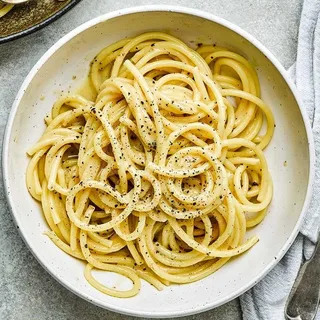
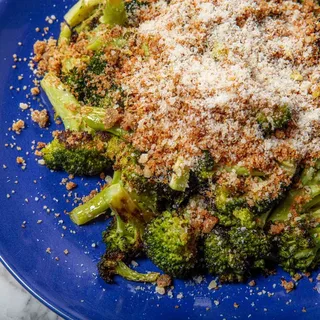
From there the family recipes behave like everything else you have saved. They get matched against your pantry, so Nan's trifle competes for a Tuesday alongside everything else instead of sitting in a folder marked family. And cook mode gives you one step at a time with its timer, which matters most on exactly these recipes, the ones you make once a year and half remember.
What this does not do well. Three honest limits.
Extraction from handwriting is good, not perfect, and it is worst on the oldest and most valuable cards: faded pencil, cursive, and fractions. Half and quarter symbols are the single most misread thing on a card and getting one wrong ruins the dish rather than degrading it, so read the result against the photograph before you keep it.
It does not gather the recipes for you. Someone still has to open the tin, scroll the group chat and ring the aunt. That is the real work and no software removes it.
And it cannot capture the part that was never written down. The way the custard is judged by eye, the point where your mum knows the meringue is right. A structured recipe holds instructions; it does not hold a technique nobody has articulated. Where you can, get that into a note in the person's own words while the person is still there to give it.
Where to start
Pick the ten you would be upset to lose
Not the collection. Ten. The tin can wait; the ten cannot, and finishing ten is what makes anyone continue.
Photograph before you transcribe
The photograph is the backup and the handwriting is the point. Do it in one sitting, in daylight, then type at your leisure.
Write down who, when, and what it was for
"Nan, Boxing Day, always doubled" is four words nobody can reconstruct once the people who remember are gone. This is the field almost everyone skips.
Record the disagreement instead of resolving it
If two kitchens make it differently, note both. A collection that admits the fork is more accurate than one that quietly picks a side.
Name the keeper, then invite everyone
One person applies changes; everyone can send them. Share it before it is finished, because it will never be finished, and an unshared collection is still one house away from being lost.
The short version
Make the printed book if you want one. It is a good gift and a bad archive.
Then make the other thing: one place, more than one copy, one keeper, everybody invited, corrections welcome. Judge it by a single test. If somebody in your family cooked from it this month without being asked to, it worked. If it has only ever been opened at Christmas, you have made a parcel, and the recipes in it are still one house fire away from gone.
Sugo is out: free on iPhone, iPad and Mac, on Android, and in any browser at app.sugo.kitchen. If your family's best recipes currently live in one tin, in one house, download Sugo.