The twelve pantry staples that make almost anything cookable
Twelve jars that turn up in dinners with nothing else in common, and the test that separates a real staple from something you bought for one recipe.
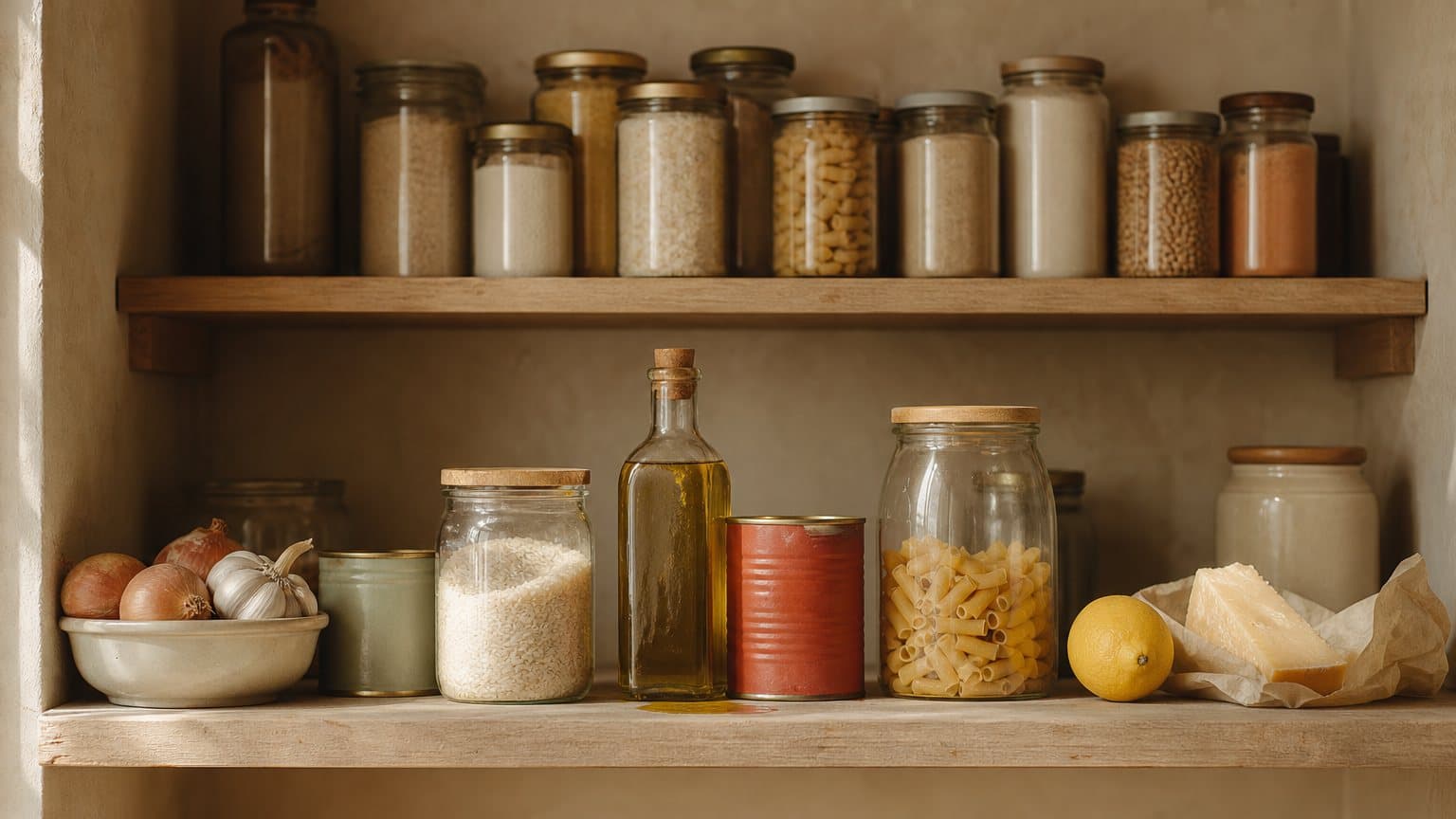
Olive oil, butter, onions, garlic, dried pasta, rice, tinned tomatoes, tinned chickpeas, red wine vinegar, lemons, anchovies, parmesan. That is the list. Keep those twelve topped up and most evenings you are one fresh ingredient away from dinner.
The list is the easy part and it is not really the point. Your cupboard already holds forty things, and on a Wednesday it still produces nothing. What the twelve above have, and the pomegranate molasses behind the tinned peaches does not, is reach: the number of different dinners a jar turns up in. That has almost nothing to do with how good the jar is, and nothing at all to do with what it cost.
A staple is an ingredient with reach. Everything else in there is a souvenir from a recipe you cooked once.
Shelf space runs out before money does
Nobody fails to stock a cupboard because the jars are expensive. Most of them cost less than a takeaway coffee, and that is exactly how cupboards end up the way they do: every single purchase is defensible, and the sum of them is a shelf you cannot see the back of.
A jar you cannot see does not exist. It also makes its neighbours slightly harder to find, and it ages out at the back while the thing you actually run short of turns out to be something else. So the question to ask of anything you are about to buy for the cupboard is how many dinners between now and Christmas it will be in the middle of.
Bought for a recipe
You needed two tablespoons of it in October. The dish was good. The jar is ninety per cent full two years later, and you will not open it again until you cook that same recipe, which you will not.
It was never a bad purchase. It was a single-use purchase filed as a permanent one.
Bought for a week
You reach for it without deciding to. It is in dinners that have nothing else in common, and it is usually in the pan before you have decided what the dinner is.
You only notice it at all on the evening it runs out.
How to see reach in your own kitchen
Do not count what you buy. The receipt records a shopping trip, not a week of cooking, and the two overlap less than you would think.
Count what you take out of the cupboard instead. For one week, keep a note on the fridge and write down every jar, tin and packet you open or use, without changing anything about how you cook. At the end of the week the note is a ranking, and it is usually an uncomfortable one.
Here is what a week of that looks like, over five dinners chosen because they have almost nothing in common: a plain pasta, a stew, a rice dish, a plate of greens and a tray of roast vegetables.
Five dinners, nothing bought except the fresh half
Off the shelfDinners
Olive oil
5- Aglio e olio
- Pasta e ceci
- Tomato rice, fried egg
- Greens with anchovy
- Roast aubergine
Garlic
4- Aglio e olio
- Pasta e ceci
- Tomato rice, fried egg
- Greens with anchovy
Onions
3- Pasta e ceci
- Tomato rice, fried egg
- Roast aubergine
Pasta
2- Aglio e olio
- Pasta e ceci
Tinned tomatoes
2- Pasta e ceci
- Tomato rice, fried egg
Tinned chickpeas
2- Pasta e ceci
- Greens with anchovy
Rice
1- Tomato rice, fried egg
Anchovies
1- Greens with anchovy
Pomegranate molasses
1- Roast aubergine
Five dinners is not a study, and the bottom of that list is where people get the argument wrong. Rice sits at one there. Over a month it would sit at eight or nine, because rice is under things. The pomegranate molasses also sits at one, and over a month it would still sit at one, because the only route to it is the recipe that introduced you to it.
That difference is the thing to test for, and you can test for it without counting anything:
Can you name three dinners this jar belongs in, right now, without opening a recipe?
Three is a low bar, and a startling amount of a normal cupboard fails it. Anchovies pass it easily once you know them: they melt into a pan of greens, they disappear into a tomato sauce, they make a dressing for anything bitter. Smoked paprika passes. Fish sauce passes, if you cook the food that uses it. Rose harissa, most weeks, does not, however good it is.
What the twelve actually cover
Six pairs, and each pair is a different thing that a dinner asks for.
Olive oil and butter
Almost everything savoury starts with one of these in a pan. Two fats rather than one because they behave differently: oil takes real heat, butter browns and makes a sauce cling.
Onions and garlic
The base under stews, sauces, rice dishes and most soups. They keep for weeks in a dark cupboard, which is what earns them a place in a list about shelves rather than fridges.
Pasta and rice
The half of dinner that decides how many people it feeds. They are also what makes a small amount of anything else read as a meal rather than a side.
Tinned tomatoes and chickpeas
A tin of each is thirty minutes from being dinner on its own. Together they are pasta e ceci, and separately they are underneath a third of everything else here.
Lemons and red wine vinegar
The thing most people are missing when a dish tastes flat and heavy and they reach for more salt. Acid at the end is the difference between food and finished food.
Anchovies and parmesan
Salt with flavour attached. A tin and a wedge give you depth in ten seconds that a stock cube spends an hour failing to imitate.
Salt and pepper are not on the list. They are the floor everything else stands on. Nobody decides to buy salt; you notice it exists on the evening you have run out, which is the same relationship you have with electricity.
These twelve are a worked example. They are the high-reach dozen for a household that cooks broadly Mediterranean food, which is the default in a lot of British kitchens and is not the default everywhere. A kitchen that cooks Sichuan food two nights a week has its own twelve, and light soy, Shaoxing wine, doubanjiang, dried chillies and Sichuan pepper are in it. A kitchen that cooks Gujarati food has cumin seed, turmeric, chana dal, tinned coconut milk and jaggery. In those kitchens my parmesan is the souvenir and their doubanjiang is the olive oil.
Reach is a fact about your cooking, so the count only means anything when you run it on your own week.
What twelve jars will not do
They will not make dinner. They make dinner possible, which is a different and smaller claim. Every meal in the figure above still needed one fresh thing: a head of greens, an aubergine, an egg, a lemon. A cupboard with nothing fresh in front of it will give you pasta with oil and garlic four nights running.
They will not help you bake. Flour, sugar, butter and eggs are a different shelf with a different logic: baking is a formula and the quantities are the recipe, so "what do I have" is the wrong question to ask of it in the first place.
Buying all twelve in one shop is also the least effective way to do this. You get a full cupboard and no habit, and half of it ages while you learn. Buy the two you would have used last week, then the next two.
And reach only counts while things are usable. Olive oil goes stale, ground spices are dead in six months, a parmesan wedge does not last forever in a warm kitchen.
Where a recipe app comes into it
Everything above is stocking, and stocking is a habit. Software is good at the bookkeeping underneath it: holding twelve jars, plus whatever is in the fridge, against three hundred recipes you have saved and cannot possibly remember.
That is what the pantry in Sugo does. You tell it roughly what is in your kitchen, once. From then on your saved recipes are ranked by how much of each one you can already make, so a Tuesday list is a list of things that do not need a shop first, with the gap shown plainly on the ones that nearly work.
Your pantry
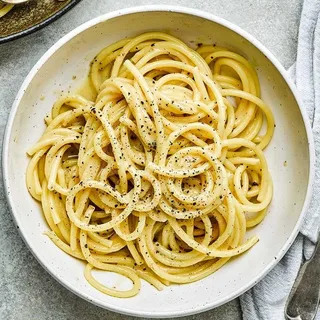
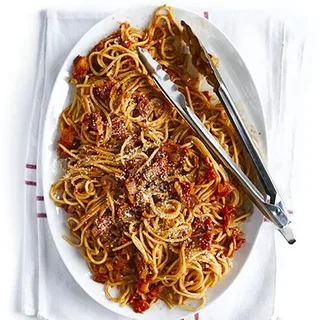
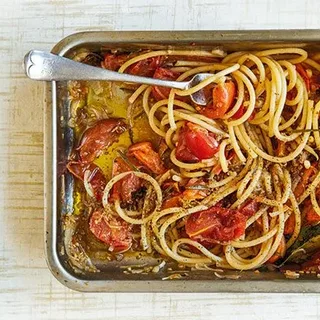
Three things follow from that.
The near misses become visible. A recipe that uses seven of its eight ingredients is worth knowing about before you start rather than at the point where you are committed. Sugo shows what is missing, and often a swap for it, which is usually another member of the same pair above.
Reach becomes measurable in reverse. If the same handful of saved recipes keeps coming up as cookable, your cupboard is what put them there. It is the list from the figure, arrived at from the other end.
Running low turns into a state you can record. You can mark a jar as low before it is empty, which matters most for exactly the things at the top of your ranking, since those are the ones whose absence cancels dinner.
Sugo does not tell you what to stock and it does not know your kitchen. It knows what you have told it, which means a jar at the back that you never entered is invisible to it in exactly the way it is invisible to you. It also thinks in ingredients rather than quantities, so "half a lemon" and "a lemon" are the same fact to it. If you want more of the technique that sits on top of this, what to cook with what you already have covers the shapes a fridge falls into, and a meal plan that survives a real week covers what to do when you do want to plan ahead.
Four weeks, and you will know your own twelve
Cook one week out of the cupboard
Buy fresh things only. No shopping for a recipe, no exceptions, and cook the way you normally would.
Write down what you opened, not what you bought
A note on the fridge door. Jars, tins and packets, every time one gets used. The ranking makes itself.
Buy doubles of the top three
Whatever sits at the top of your list should never be the reason a dinner stops. This is the only thing on this page worth over-buying.
Give the single-recipe jars a date
Anything that failed the three-dinners test gets one month to be used on purpose. Look up the recipe that brought it home and cook it again, or accept that the shelf is worth more than the jar.
Most cupboards are not under-stocked. They are stocked for forty different evenings that each happened once. The shortest route to knowing which twelve of them are yours is a week of writing down what you already reach for.
Sugo is free on iPhone, iPad and Mac, on Android, and in any browser at app.sugo.kitchen. If your cupboard is full and Wednesday still ends in toast, download Sugo.