How to start cooking for yourself in a new kitchen
How to start cooking for yourself in an empty kitchen: what to cook first, what to buy, and why each dinner should use up what the last one left.
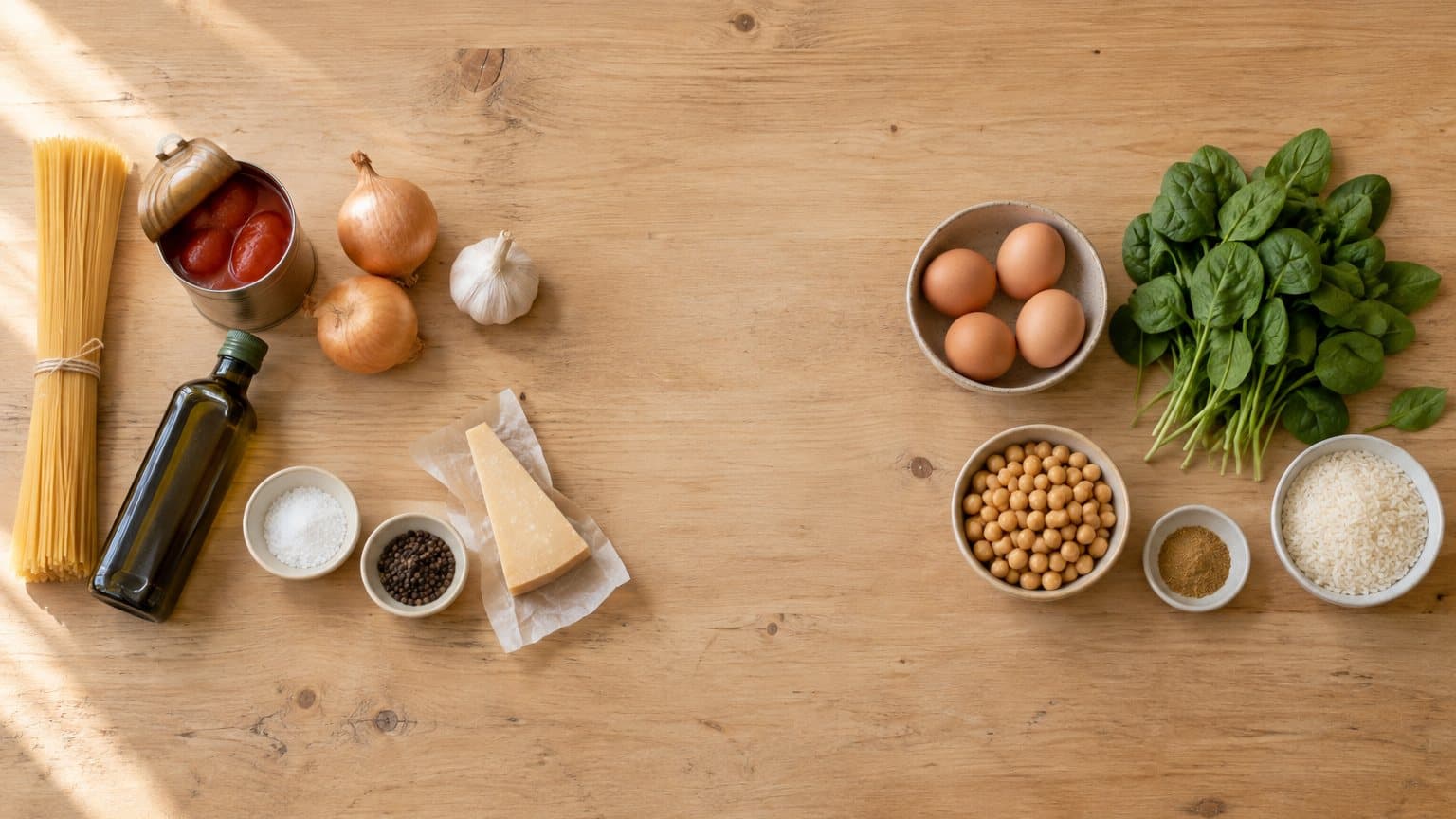
The first recipe you cook in an empty kitchen is the expensive one. It has to pay for the olive oil, the salt, the pepper, the garlic and the onions, which no recipe lists as a purchase, and it leaves most of them behind, part-used. So choose your second dinner for what the first one left: the rest of the spinach, most of the parmesan, a bulb of garlic with nine cloves still on it. Choose the third for what the first two left. By the fourth you can cook a whole dinner without buying anything new.
That is the method for a first kitchen: a short chain of dishes that share ingredients, each cooked twice before you add another. The worked example below comes with what to buy for it and the equipment it needs.
What to cook first as a beginner
Most lists of first dishes are chosen one dish at a time, for being easy: an omelette, a tomato pasta, a stir-fry, a curry, a risotto. Any of them is worth learning, and cooked in a row in a new kitchen they are five separate shops. The curry wants a jar of paste and a tin of coconut milk you will use half of. The risotto wants arborio rice, stock and a bottle of white wine. By Thursday the fridge holds three half-used things from three cuisines, and none of them adds up to a dinner.
Four dinners picked one at a time
A tomato pasta, a green curry, a mushroom risotto and a stir-fry. Each is easy on its own. Together they ask for curry paste, coconut milk, arborio rice, stock, wine, soy sauce, ginger and noodles on top of the basics, and most of those get used once.
Four dinners picked for what the last one left
A tomato pasta, a spinach frittata, a chickpea and spinach stew, and pasta e ceci. The second uses the first's onions and parmesan, the third finishes the spinach, and the fourth is made entirely of things already in the kitchen.
This is the second chain on one counter, from the empty kitchen onwards. Each dinner puts down what it had to buy, and the rest of its list was already there.
Four first dinners in an empty kitchen

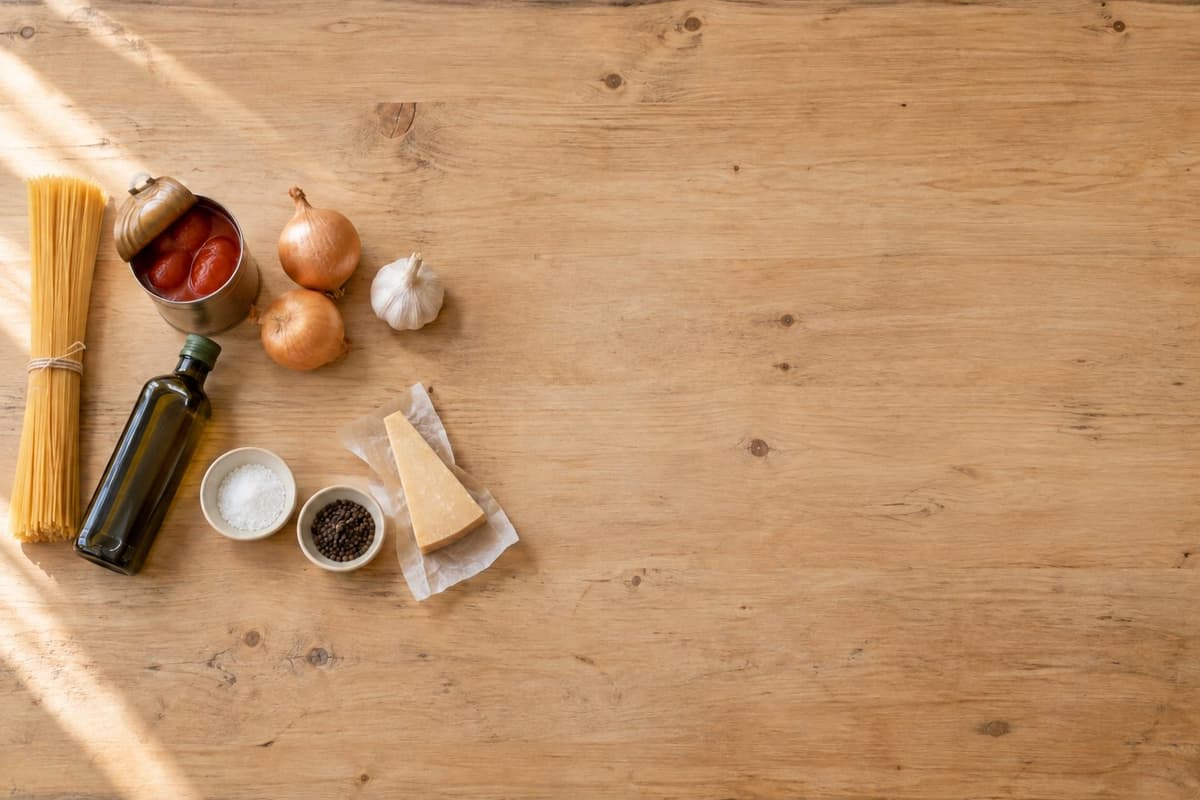
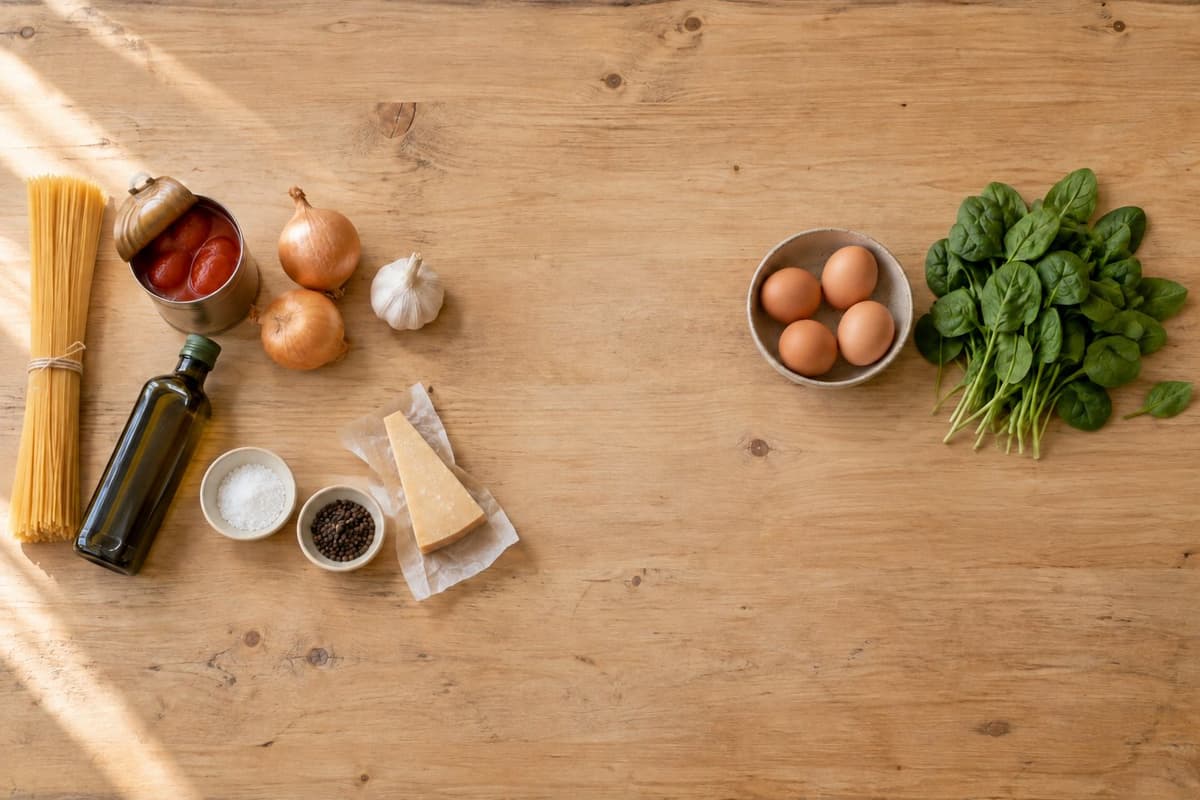
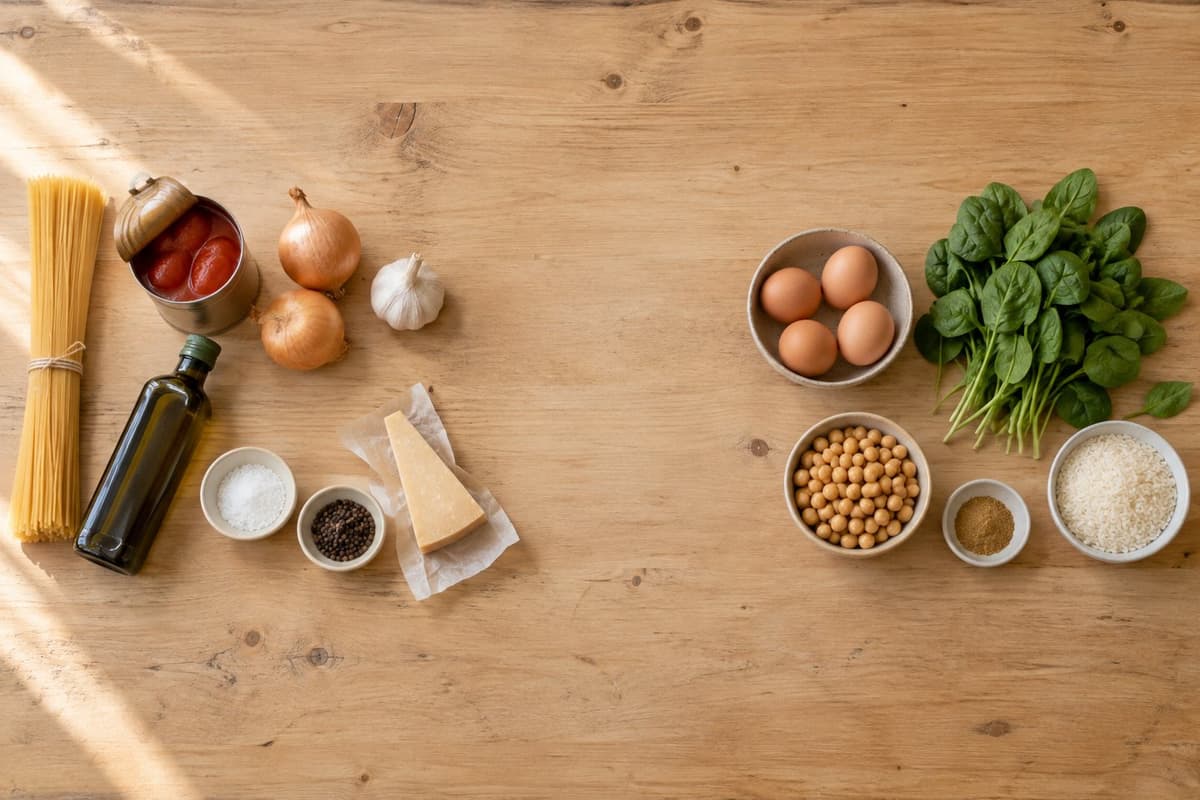
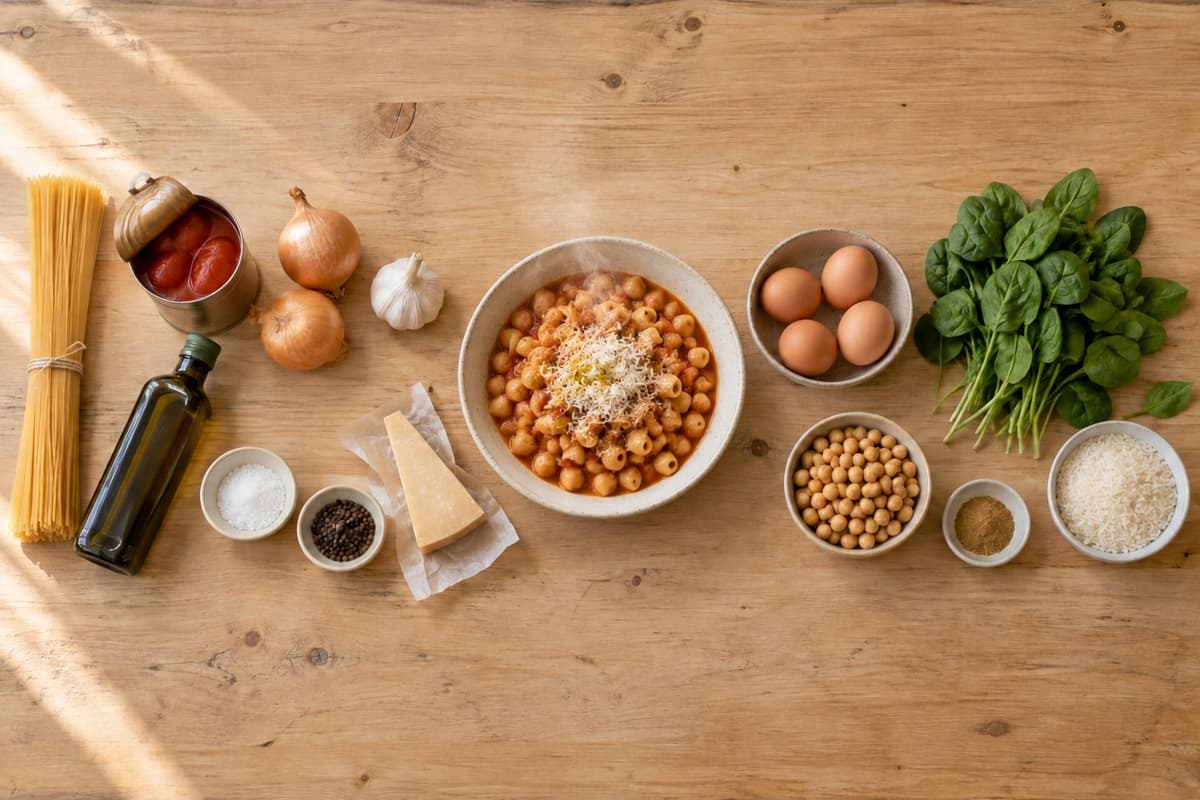
- Tomato pasta: 8 new. Bought for this dinner: Pasta, Tinned tomatoes, Onion, Garlic, Olive oil, Salt, Black pepper, Parmesan.
- Spinach and parmesan frittata: 2 new. Bought for this dinner: Eggs, Spinach. Already in the kitchen: Onion, Parmesan, Olive oil, Salt, Black pepper.
- Chickpea, spinach and tomato stew with rice: 3 new. Bought for this dinner: Chickpeas, Cumin, Rice. Already in the kitchen: Spinach, Tinned tomatoes, Onion, Garlic, Olive oil, Salt.
- Pasta e ceci: 0 new. Already in the kitchen: Pasta, Chickpeas, Tinned tomatoes, Garlic, Olive oil, Salt, Black pepper, Parmesan.
Eight new things for the first dinner, two for the second, three for the third and none for the fourth. Thirteen ingredients cover all four. Olive oil and salt are in every one, and onion, garlic, pepper, tinned tomatoes and parmesan are each in three.
Cook the stew first and it buys nine things on the first night instead of eight. Whichever dish goes first pays for the cupboard, so make it the one with the most ordinary ingredients, because those are the ones later dinners will want.
Why the first shop costs the most
Recipes are written for a kitchen that already exists. "Season with salt and pepper" sits at the end of a method as if the salt were on the counter, and "a good glug of olive oil" assumes a bottle. In a stocked kitchen those cost nothing on the night. In an empty one they are a large part of the first bill, and the ingredient list gives no warning.
The upside is that they are bought once. The oil, salt, pepper and garlic from the tomato pasta are still there on night four, and they are most of the reason nights two to four are cheap. A tomato pasta makes a good first dinner because it is easy, and also because what it leaves behind is the start of most weeknight cooking. Once the chain is running, the 12 pantry staples that make anything cookable is the list to grow the cupboard towards.
The ingredients that go off need the opposite treatment. A bag of spinach is more than one frittata wants, so the chain sends the rest into the stew. When a dinner calls for something perishable, pick the next dinner to finish it. In a first kitchen, most of what ends up in the bin was bought for one recipe and then had nowhere to go.
Cook each dish twice before adding a new one
Ina Garten's standing advice to new cooks, repeated in interviews and written up by The Daily Meal, is to learn six really good recipes and make them over and over. The chain makes that cheap. The second tomato pasta costs a packet of pasta and a tin of tomatoes, because everything else is already in the kitchen.
The second attempt is also where the learning happens. The first time, you read every line of the method, look up what "soften" means, and check the pan against the photo. The second time you know what a softened onion looks like, so you are watching the pan instead of the screen. A new cook who makes eight different dishes in a fortnight has done eight first attempts. One who cooks four dishes twice has done four of each. Expect the first attempt to run long, too: recipes take longer than they say, and most of the overrun is reading and finding things.
Basic kitchen equipment for beginners
The four dinners above make a better equipment list than any shop's starter set, because they only ask for what they use.
A knife and a board
A medium cook's knife and a board big enough that a chopped onion stays on it. Every dinner here starts there.
A large pot with a lid
For the pasta water and for the stew. The lid matters more than the brand.
A frying pan
Non-stick and wide, for the onions, the sauce and the frittata.
A wooden spoon and a colander
The spoon goes in every pan. The colander drains the pasta and rinses the chickpeas.
A tin opener and a grater
Three of the four dinners open a tin, and three finish with parmesan.
What can wait
A garlic press, a food processor, a set of nine pans. Buy one when a dish you cook every week asks for it.
Where Sugo comes in
A first attempt is when you read every step, and a recipe page is laid out for deciding whether to cook something: photo, story, ingredient list, then the method in a block you scroll through with oily fingers. Cook mode in Sugo puts one step on the screen at a time, starts that step's timer with it, and ticks the ingredients off as they go in.
For a chain like the one above, the other useful part is the pantry. Tell Sugo roughly what is in the kitchen and it ranks your saved recipes by how much of each one you can already make, with the missing items shown. After a fortnight, that list is a fair answer to what the cupboard can cook next.
Sugo will not choose the chain for you. It ranks the recipes you have saved by what you own, but it does not suggest a dish to learn next because it shares your spinach, and it has no idea which recipes make a good first attempt. Cook mode shows the recipe's own steps, so if a step says "soften the onion", that is all it says. It will not tell you what softened looks like, and nothing in it watches the pan. You learn that by cooking the dish twice.
Questions people ask
What should I cook first as a beginner?
A tomato pasta, a frittata and a simple chickpea or bean stew are good first dinners because they share most of their ingredients. The order matters as much as the dishes. Start with the one whose leftovers you will use, then pick each next dinner for what the last one left. In the example above, four dinners need thirteen ingredients between them, and the fourth needs nothing new at all.
What basic ingredients should a beginner buy first?
Buy for your first recipe and let the cupboard grow from there. Almost every savoury recipe assumes olive oil, salt, black pepper, onions and garlic, and few of them list those as things to buy. Add a tin of tomatoes, a packet of pasta and a piece of hard cheese and you have the first dinner here plus most of the next three. Spices can wait until a dish you want to cook asks for one.
What kitchen equipment do I need to start cooking?
For the four dinners in this post: a knife, a board, a large pot with a lid, a frying pan, a wooden spoon, a colander, a tin opener and a grater. That is eight things, and a few of them can usually be borrowed. Leave the garlic press and the food processor until a dish you cook every week needs one.
How many recipes should a beginner learn?
Fewer than it feels like. Ina Garten's advice to new cooks is to learn six good recipes and make them over and over until you are really good at them. Four dishes that share ingredients, each cooked twice, is a fortnight of dinners, and it teaches more than eight dishes cooked once, because the second attempt is where you stop reading the method and start watching the pan.
How do I cook for one without wasting food?
Most of the waste in a first kitchen is a perishable thing bought for one recipe, used once and then left with nowhere to go. Put each perishable ingredient into two dinners in a row, the way the spinach goes into the frittata and then the stew above. Hold off on any dish that needs one unusual ingredient until you have a second dinner that uses it as well.
Your first fortnight, in order
Pick a first dinner whose leftovers you want
A tomato pasta leaves oil, garlic, onions, parmesan and half a packet of pasta, which is the start of most weeknight cooking.
Choose the second dinner for what the first left
Look at what is part-used and pick a dish that uses it. Two new ingredients is a good night.
Put anything that goes off into two dinners in a row
Spinach, herbs, a bag of salad. Buy them for a pair of dinners.
Cook each dish twice before adding another
The second time costs a packet and a tin, and it is the one you learn from.
Buy equipment when a dish asks for it
A pot, a pan, a knife and a board get you through all four dinners.
Thirteen ingredients, a pot and a pan is a smaller start than most first-kitchen lists suggest, and by the end of the second week every one of those ingredients has been used more than once.
Sugo is free on iPhone, iPad and Mac, on Android, and in any browser at app.sugo.kitchen. If you have just moved into a kitchen with nothing in the cupboards yet, download Sugo.
