What to cook with what you already have
Cooking from the fridge is a skill, not a talent. A practical method for turning whatever is in your kitchen into dinner, and less food in the bin.
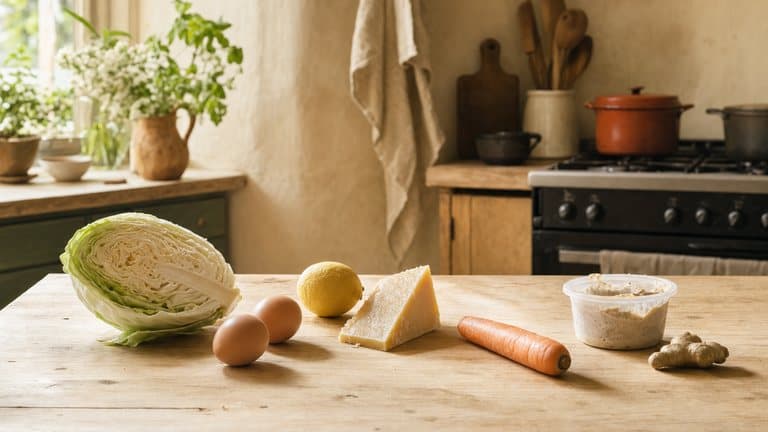
Most weeknight cooking problems are not really "what should I make?" They are "what can I make, right now, with what is in this kitchen, before the courgette goes."
These are different questions and they have different answers. The first sends you to a recipe site, which will happily suggest something requiring three ingredients you do not own. The second is a constraint-solving problem, and it is the one that actually needs answering at 7pm on a Tuesday.
The good news is that cooking from what you have is a method, not a gift. People who are good at it are not improvising. They are running a fairly small set of patterns, quickly.
Start with what is about to go off
Not with what you fancy. Open the fridge and find the thing with the shortest life left: the herbs going dark at the edges, the half-bag of spinach, the yoghurt near its date, the mushrooms starting to wrinkle.
That ingredient is now the brief. Everything else in the meal gets chosen to support it.
This one reordering does more for both waste and decision fatigue than any amount of meal planning. Households throw away a genuinely large share of the food they buy, and most of it is not bought carelessly. It is bought with good intentions and then forgotten behind something else. Cooking from the front of the queue fixes that without any additional effort.
Learn the shape of a meal, not more recipes
Nearly every quick dinner is one of a handful of shapes. Once you can see the shapes, a random collection of ingredients stops looking like nothing and starts looking like a decision.
| Shape | What it needs | Works with |
|---|---|---|
| Fried rice / noodles | Cooked grain or noodles, fat, aromatics, egg or protein, something green | Almost any leftover vegetable |
| Soup | Aromatics, stock or water, a starch or pulse, anything soft | Tired vegetables, ends of things |
| Frittata / omelette | Eggs, fat, a cooked filling, cheese if you have it | Cooked potato, greens, herbs |
| Grain bowl | Cooked grain, a raw crunchy thing, a protein, a strong sauce | Whatever is loose in the fridge |
| Pasta | Pasta, a fat, an aromatic, one strong flavour | Anchovy, garlic, chilli, hard cheese |
| Traybake | Something starchy, a protein, a fat, high heat | Root vegetables, sausages, chicken |
None of these require a recipe. They require knowing that you have eggs, or a grain, or pasta, and then a rule for what goes with what.
Keep a real backbone in the cupboard
Improvising only works if the boring half of the meal is always there. Cooking from what you have is easy when what you have includes: The 12 pantry staples that make almost anything cookable is the list of what that backbone should be.
A starch that keeps
A fat
Aromatics
Acid
Salt with flavour in it
Heat or fragrance
With that backbone, almost any single fresh ingredient becomes a meal. Without it, a fridge full of vegetables is still not dinner.
Cook the vegetable properly
The reason fridge-clearing meals get a bad reputation is that everything ends up steamed together in one sad pan.
Give the main vegetable a real treatment. Roast it hot enough to brown. Fry the mushrooms in a single layer and leave them alone until they colour. Char the cabbage. The difference between "using things up" and "dinner" is almost entirely whether something in the pan got browned.
Where a tool actually helps
Everything above is technique, and technique does not need software. What software is genuinely good at is the bookkeeping: remembering what you own, and matching it against the recipes you have already decided you like.
That is what the pantry in Sugo does.
You tell Sugo roughly what is in your kitchen. It then ranks your saved recipes by how much of each one you can already make, so the list you are looking at on a Tuesday is the list of things that do not require a shop first, with the missing items shown plainly for the ones that nearly work.
Your pantry
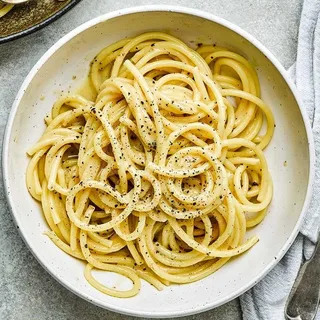
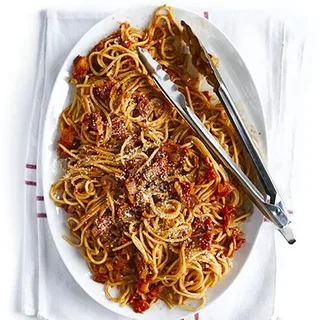
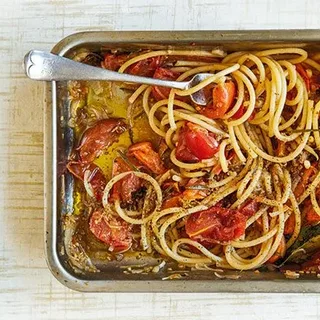
A few things fall out of that:
The gap is visible, not a surprise. Knowing a recipe is one ingredient short before you start is the entire difference between a good evening and an annoying one.
Your library gets more useful as it grows. A big collection of bookmarks is a burden. A big collection matched against your pantry is a genuinely better set of options every week.
You can ask in plain language. Ask Sugo knows both your saved recipes and your pantry, so "something quick with the chicken and the spinach" is a question with a real answer rather than a search query.
The shopping half stays joined up. When you do plan ahead, a meal plan rolls up into a shopping list that already knows what you own, rather than one that makes you buy a third jar of cumin.
Sugo does not invent dinner out of nothing, and it should not: the recipes it suggests are the ones you already chose to save. It just stops your own library from being a memory test.
The habit worth keeping
Once a week, before you shop, cook one meal entirely out of what is already there. No additions.
It is a good constraint. It clears the fridge, it teaches you the shapes faster than any recipe collection will, and it is usually the meal you end up remembering: partly because you made it up, and partly because nothing went in the bin.
Sugo is free on iPhone, iPad and Mac, on Android, and in any browser at app.sugo.kitchen. If your fridge and your recipe collection have never been on speaking terms, download Sugo.