How to reduce food waste without meal planning
How to reduce food waste at home with no meal plan: pick each dinner by what goes off first, keep an eat-first shelf, and shop for the nights you cook.
Change the order of one question. Before you decide what you fancy for dinner, open the fridge and find the thing that will be past it soonest, and cook something that uses it. Do that every evening and most of the waste a meal plan would have prevented never happens, with no plan to keep.
It works because of what household food waste mostly is. In WRAP's UK research the largest single reason food goes in the bin is that it was "not used in time", which covers about 40% of it in their recent reporting. That food was bought on purpose and went off while nobody was looking at it. A plan stops that by deciding on Saturday which night each thing gets eaten. The evening question does the same job a night at a time, and it carries on working through the takeaway on Tuesday that would have broken the plan.
Why food gets thrown away
A fridge runs on a timetable. A bag of spinach has a couple of good days, mushrooms a few more, a cabbage the best part of a fortnight. You choose dinner on a different timetable entirely: what you feel like, who is home, how late the train was.
Those two schedules never get compared. You shop on Saturday for a week of possible dinners, and from Monday on you choose by appetite, so a food survives only if your appetite happens to reach it before its window closes. The short-lived things lose that race most often, which is why fresh vegetables and salad are the food group WRAP finds in household bins most.
Nobody did anything careless. The spinach was going to be a Monday dinner, then Monday was pasta because there was an open jar of pesto, and on Wednesday the bag was slime.
What meal planning actually fixes
A meal plan works by putting the two schedules on one page. When you write "Monday: spinach and eggs" you have matched a food to a night inside its window, and you buy only what the week's dinners need.
It also asks for a lot. You have to know on Saturday what you will want on Thursday, and the plan is only as good as the week it was written for. One late night, one dinner out, one evening where the chicken just does not appeal, and the plan's Thursday food is now sitting in a fridge with no night assigned to it. A meal plan that survives a real week is about building one that bends. This post is for the weeks when you will not write one at all.
Cook from what goes off first
The matching a plan does on Saturday can be done each evening instead, in about two minutes. Look in the fridge, find the food with the shortest life left, and let that be the brief for dinner. You still choose the dish. You choose it from a shorter list.
Here is one fridge after a Saturday shop, run through the same five weeknights twice. Both weeks have a takeaway on Tuesday. The only difference is which question came first each evening.
One fridge, five nights, chosen two ways
Dinner by what you fancy
In the bin2
Mon
Tue
Wed
Thu
Fri
Bag of spinach
Coriander
Mushrooms
Courgettes
Half a cabbage
- MonPasta with the open jar of pesto
- TueTakeaway
- WedMushroom risotto
- ThuCourgette fritters
- FriSausages and slaw
Dinner by what goes first
In the bin0
Mon
Tue
Wed
Thu
Fri
Bag of spinach
Coriander
Mushrooms
Courgettes
Half a cabbage
- MonSpinach and eggs on toast
- TueTakeaway
- WedMushroom noodles, coriander on top
- ThuCourgette fritters
- FriSausages and slaw
Two things are worth seeing in it. The spinach is lost on Wednesday, two days into a week in which nothing had gone wrong yet, so by Friday, when you might notice, there is nothing left to save. And the takeaway costs nothing in the second week, because the evening question only ever asks about the fridge as it is that night. A plan would have had a dinner on Tuesday and pushed everything after it out by a day.
The cabbage never gets struck in either week. A food with a fortnight in it can wait for your appetite to come round, which is why the rule only needs to care about the front of the queue.
The fridge as a queue: an eat-first shelf
The evening question is easier when the answer is in view. That is all an "eat first" shelf is: one shelf at eye level, or a box on a shelf, where anything with a short life left goes. Restaurant kitchens call the same habit first in, first out, and it is mostly a matter of putting new shopping behind the old.
What goes on the shelf sorts itself into roughly three groups once you have done it for a fortnight.
Goes first
Bagged leaves, spinach, soft herbs, mushrooms, berries, anything already open. These set the next two dinners.
Has a few days
Courgettes, peppers, broccoli, tomatoes, a pot of yoghurt. They wait while the first group is used, then they lead.
Keeps
Cabbage, carrots, onions, potatoes, hard cheese. They fill in around the others and almost never set the brief.
The shelf also catches leftovers, which are the other big entry in the bin. A portion of last night's dal on the eat-first shelf is lunch. The same portion behind the milk is a mystery tub in ten days.
Shop for the nights you will cook
The evening question fixes how food leaves the fridge. The other half is how much goes in. Without a plan it is easy to shop for possibility, every dinner you might cook this week, and possibility is always bigger than the week.
One big weekly shop
Fresh food for seven dinners, chosen before you know the week. The short-lived things are bought on Saturday for Thursday, which is past their window before Thursday arrives.
A smaller shop, then a top-up
The keepers in bulk, fresh food for the next two or three dinners, and a second trip midweek for the rest once you know what the week turned into.
There is research behind the second column. A study of US households from Duke University's World Food Policy Center found that households that shop more often tend to waste less, and also that people really dislike adding the extra trip. So the trade is time for food, and whether it is worth it depends on how near the shop is. If it is far, buy the short-lived things in smaller amounts and lean on the freezer, which stops a food's clock completely.
When something is about to turn anyway, the formats in what to cook with what you already have take almost anything: soup, a frittata, fried rice, a traybake. For a bunch of herbs specifically, what to do with leftover herbs has the four dishes that use a whole one.
Where Sugo comes in
The evening question has two halves. Finding what goes first is a look in the fridge. Finding a dinner that uses it is a search through every recipe you know, at seven in the evening, which is where most people give up and make the pesto pasta.
The pantry in Sugo does the second half. You tell it what is in your kitchen, and it ranks the recipes you have saved by how much of each one you can already cook, with the missing items listed for the ones that nearly work.
Your pantry
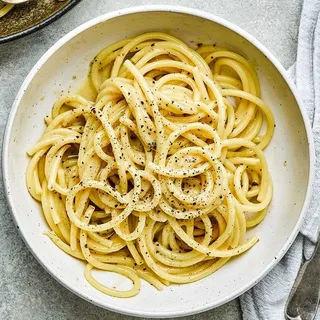
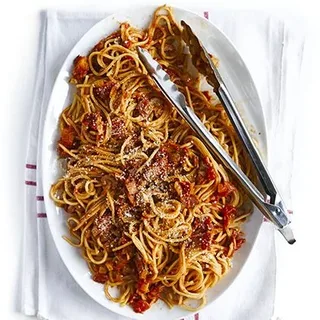
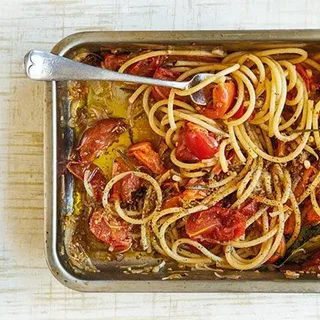
So "spinach, eggs, the end of a block of feta" comes back as the dinners in your own collection that use them, ordered by how little you would have to buy. Ask Sugo takes the same question in plain words, such as "something that uses up the mushrooms tonight".
What it does not do is the first half. Sugo has no dates on anything in the pantry: it does not know the spinach was bought on Saturday or that it has a day left, so it cannot rank by urgency or warn you before something turns. You still have to open the fridge and name the food. And it can only suggest recipes you have saved, so the pantry is as useful as the collection behind it.
Questions people ask
What is the main reason people throw food away?
Mostly because it was not used in time. In WRAP's UK household research that is the largest single reason, at about 40% of household food waste in their recent reporting: food that went off or passed its date before anyone cooked it. Leftovers that were never eaten and food left on plates make up much of the rest.
Does an eat-first shelf actually work?
It works for the same reason the evening question does: it puts the food with the shortest life left where you look when you choose dinner. It needs one habit to keep it going, which is putting new shopping behind what is already there. Without that the shelf fills with whatever was bought last.
Is it better to shop more often to reduce food waste?
Usually, yes. A Duke University study of US households found that those who shop more often tend to waste less food, because they buy closer to when they cook. The same study found people strongly dislike adding trips, so a sensible middle is one main shop for the keepers and a short top-up midweek for fresh food.
Which foods get wasted the most at home?
By weight, fresh vegetables and salad are the food group UK households throw away most in WRAP's figures, with potatoes and bread among the single items at the top. In Spain's 2024 household panel, fruit was the largest share of the food binned unused. All of them are short-lived and bought in quantities a week does not always finish.
Can you cut food waste without meal planning?
Yes. A plan matches food to nights in advance; you can do the same matching every evening by choosing dinner from whatever goes off first. Add an eat-first shelf so the answer is in view, and buy short-lived food for the next few dinners only, with a top-up later in the week.
Cutting food waste without a plan
Ask what goes off first, then what you fancy
Every evening, in that order. The answer to the first question is the brief for the second.
Keep one eat-first shelf
At eye level, new shopping behind the old, leftovers included.
Buy short-lived food for two or three dinners
Keepers in bulk, fresh food in smaller amounts, a top-up midweek.
Freeze what the week will not reach
Bread, a portion of soup, the second half of a pack. The freezer stops the clock.
None of this asks you to know on Saturday what you will want on Thursday. It asks for one look in the fridge before you decide, and that look is cheaper than a plan you then have to keep.
Sugo is free on iPhone, iPad and Mac, on Android, and in any browser at app.sugo.kitchen. If there is a bag of spinach in your fridge with a day left and no dinner planned around it, download Sugo.
