How to organise 500 saved recipes you have never cooked
You did not save 500 recipes, you saved 500 intentions. A one-hour method for cutting a bloated recipe library down to the part that answers a Tuesday.
The fix is not more folders. A library of five hundred saved recipes is not untidy, it is misfiled: it has been sorted by what each recipe is (Italian, baking, chicken thighs) and you interrogate it by what your evening is (forty minutes, nothing bought, one person who will not eat mushrooms). No amount of nesting reconciles those two axes.
So do this instead, in one sitting. Pull out the fifteen or twenty dishes you already cook and put them somewhere separate. Keep anything you would genuinely cook in the next month. Let everything else become an archive you search rather than a list you scroll, and then stop counting it.
That is about an hour of work and it is the whole method. The rest of this is why the pile reached five hundred, and what each part of it is actually for.
You did not save 500 recipes
You saved five hundred intentions, which is a different object.
A save is made in the mood of a lunch break. You are not hungry, you have no idea what Thursday looks like, the video is beautiful, and saving costs nothing. Cooking happens in the opposite mood entirely: you are hungry, it is quarter past six, and Thursday has turned out to involve a late call and half a cabbage.
Nothing is wrong with saving in the first mood. It is how anyone finds anything good. The mistake is expecting a collection built by aspiration to answer a question asked under constraint, and then blaming yourself, or the folders, when it will not.
What a save records
The dish, where it came from, roughly what it looked like, and the mood you were in when you found it. Enough to find it again by name, if you can remember the name.
What choosing needs
How long it really takes on a weeknight. What it needs from a shop. How much attention it wants while it cooks. Whether the people at your table will actually eat it.
Those are not the same facts, and the second set is mostly not in your library at all. It is a filing problem, and you have been treating it as a discipline problem.
Count it honestly before you sort anything
Do the arithmetic first, because the number is what makes the rest of this easy.
Four questions, in order. How many recipes are saved? Of those, how many do you actually remember saving? Of those, how many would you genuinely cook in the next month, at the effort level you actually have on a weeknight rather than the one you have on holiday? And of those, how many have you already cooked more than once?
One library, counted honestly
500
Saved
Everything you have ever tapped save, bookmark or share on.
212
You remember saving
The rest are a surprise. You cannot want something you have forgotten.
46
You would cook this month
At the effort you have on a Tuesday, not the effort you have in theory.
19
You have cooked twice
The rotation. It already exists, it has just never been written down.
The numbers above are invented. They are one plausible library, and the shape is the point: your own four numbers will differ and will still fall away just as steeply.
That last row is the useful discovery. You are not short of recipes and you never have been. You are short of a shortlist.
The four questions a Tuesday actually asks
Here is what you are really filtering on at half past six, and none of it is cuisine.
How long, honestly
Not the number written on the recipe. The number for you, in your kitchen, including getting things out and putting them away.
What it needs from a shop
Nothing, one thing on the way home, or a proper trip. This single fact rules out more recipes on a weeknight than every other consideration put together.
How much attention
A risotto and a traybake are both forty minutes and they are not remotely the same evening. One of them you can walk away from.
Who is eating
The fussy one, the vegetarian one, the one who is out, the one who has already eaten. Half a good library is unusable on any given night for this reason alone.
Cuisine is how a bookshop is organised, and a bookshop is a place you browse. You are not browsing. You are hungry.
Do the pass in one sitting
Curating gradually does not work, for the same reason a wardrobe never gets thinner one garment at a time: every individual decision is easy to defer and the pile only grows between decisions.
Set aside an hour. Go in order, give each item a few seconds, and use a rule you decided before you started rather than one you renegotiate per recipe.
The rule that works: would I cook this in the next fortnight if the ingredients turned up in my kitchen? Yes goes to the rotation. Maybe goes to the archive, untouched. No gets deleted, or archived if deleting genuinely bothers you.
At seven seconds an item, five hundred is under an hour, and it goes faster than that because most of it is obvious. Four things make it much faster still:
- Start at the oldest. The oldest saves are the easiest calls and they get your hand in before you reach anything you have feelings about.
- Do not open anything. If you have to open the recipe to decide, the answer is archive. You have just proved it is not a fortnight recipe.
- Do not tidy as you go. Renaming, re-tagging and fixing a broken link mid-pass is how an hour becomes a Saturday. Sort now, tidy the survivors later.
- Duplicates go to the most recent copy. Two saves of roughly the same roast chicken means you liked it twice, not that you need both.
A word in defence of not deleting: if it bothers you, do not do it. An archive you never scroll costs nothing and searches fine. The goal was never to own less. It was to stop the twenty recipes you cook from being buried under the four hundred and eighty you do not.
Rebuild it on the axis you use
Three tiers, not twenty folders.
Rotation is the small set you actually cook, and it is the only tier you will look at most weeks. This month is the shortlist you are working through, and it should stay small enough to feel like a plan. Archive is everything else, and its job is to be searched, never scrolled.
Then tag the rotation, and only the rotation, on the four questions above: time, shop, attention, who it suits. Twenty recipes with four honest tags each is twenty minutes of work, and it is worth more than five hundred recipes filed perfectly by cuisine, because it is the only version of your library that can answer the question you actually ask.
Tagging all five hundred is the project you have already abandoned once. Do not start it again.
Where a tool helps
Everything above works with a notebook and a folder of screenshots. What software is genuinely better at is the bookkeeping half: remembering what is in there, and answering a question in the shape you actually asked it.
That is most of what a cookbook in Sugo is for.
Whatever they were saved from, recipes arrive structured, so ingredients, times and steps are fields rather than a page you have to reopen and read (see how to save recipes so you actually cook them for why that distinction does most of the work). A library made of fields can be asked questions. A library made of links can only be listed.
ask sugo
Three things follow from that.
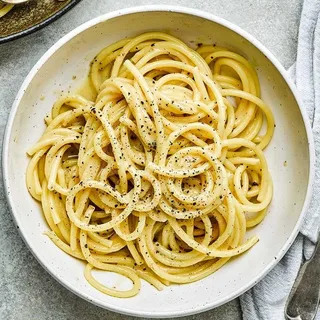
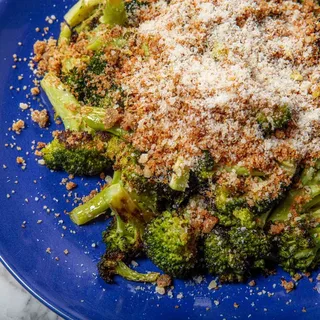
Half a memory is enough. "That lentil thing with the yoghurt, from a video, some time in the spring" is a fair question to ask Ask Sugo, and it is how people actually remember food. Nobody remembers the title.
The pantry does your shortlisting. The pantry ranks your saved recipes by how much of each one you can already make, which answers the "what it needs from a shop" question without your having tagged a single thing. That is the subject of what to cook with what you already have.
Cookbooks are cheap and overlapping. A recipe can sit in several at once, so a rotation cookbook and a one-day cookbook give you most of the tiering above with none of the file-manager work.
What this does not do well. It cannot tell you whether a recipe is any good. Ranking by what you can cook tonight is not ranking by what is worth cooking, and that judgement stays yours: import four hundred old bookmarks and they arrive with every bad decision intact. Imported times are only as honest as whoever wrote them, and recipe times are famously optimistic, so treat an imported "25 minutes" as a claim rather than a fact. Near-duplicates are matched imperfectly, and two saves of roughly the same dish from two different sites will often both survive for you to choose between. Most of all, bringing five hundred bookmarks in still leaves you with five hundred recipes: the triage above is a set of decisions, and no importer makes decisions for you.
The pass, in order
Count it first
Four numbers, ten minutes. Saved, remembered, would cook this month, cooked twice. The last one is the library you actually have.
Write down the rotation from memory
Before you open anything, list the dishes you already cook. That list is the target; the pass is just finding those recipes and separating them.
One hour, one rule, no opening
Would I cook this in the next fortnight if the ingredients appeared? A few seconds each. Opening a recipe to decide is itself the answer.
Three tiers, not twenty folders
Rotation, this month, archive. The archive is for searching, not scrolling, so it does not need to be tidy.
Tag the rotation only
Time, shop, attention, who it suits. Twenty recipes, twenty minutes, and the library can finally answer a weeknight question.
What the collection is for
A recipe collection is not a reading list and it is not a museum. It has one job, which is to hand you three decent options when you are hungry and short of time, and it does that job with about twenty recipes and a reliable way of searching the rest.
The other four hundred and eighty are not a debt and they are not a reproach. They are an archive, and an archive is only a burden for as long as you are still scrolling it.
Sugo is out: free on iPhone, iPad and Mac, on Android, and in any browser at app.sugo.kitchen. If your recipe collection has quietly become a place recipes go rather than a place they come from, download Sugo.