How to save recipes so you actually cook them
Most saved recipes are never made again. Here is a system for saving recipes that survives a real week, and how Sugo automates the tedious half of it.

There is a particular kind of failure that every home cook knows. You find a recipe that looks perfect. You bookmark it, screenshot it, send it to yourself on WhatsApp, or leave the tab open with a quiet promise to come back. Three weeks later you are standing in the kitchen at 7pm with no idea what to make, and that recipe is somewhere in a pile of four hundred others you will never open again.
The problem is not that you are disorganised. The problem is that saving and cooking are two completely different activities, and most people only build a system for the first one.
Saving happens on the sofa, on a phone, in a spare thirty seconds. Cooking happens standing up, with a deadline, often tired, usually with whatever is already in the fridge. A saved recipe only counts if it can survive the trip between those two moments.
Here is how to build a saving habit that does.
Why bookmarks fail
Bookmarks, screenshots, and "send to self" messages all share the same flaw: they save a pointer, not a recipe.
What a bookmark keeps
- A web address
- A page title, if you're lucky
What a saved recipe keeps
- Ingredients, with quantities and units
- Steps, timings, servings
- Where you found it, and when
- What you changed last time you cooked it
A bookmark remembers where something lived. It does not know that the dish takes forty minutes, needs two eggs, serves four, or is the one thing your flatmate will reliably eat. So when you go looking, you cannot ask the only questions that matter at 7pm:
- What can I make in under thirty minutes?
- What can I make with the chicken thighs I already have?
- What was that pasta thing I loved in March?
You are left scrolling a list of titles, half of which are marketing copy, hoping something jogs your memory. That is a search problem dressed up as a storage problem, and it gets worse with every recipe you add. The bigger your bookmark folder gets, the less useful it becomes. A good recipe system should get more useful as it grows.
The four things a saved recipe needs
Whatever tool you use (a notebook, a spreadsheet, an app) a saved recipe is only cookable later if it carries four things with it.
1. The actual text, not a link
Links rot. Sites redesign, posts get deleted, creators move platforms, and paywalls appear where none used to be. If the recipe lives only at the other end of a URL, you do not own it.
Copy the ingredients and the method into your own store. This sounds tedious, and by hand it is, which is exactly the part worth automating.
2. Structured ingredients
"2 tbsp olive oil" needs to be stored as a quantity, a unit, and an ingredient, not as a line of text. That is what makes everything else possible later: scaling a recipe from four servings to two, generating a shopping list, or checking what you already have.
A recipe stored as a wall of prose can be read. A recipe stored as structured data can be used.
3. Enough context to find it again
Time, servings, cuisine, the meal it belongs to, and above all how you found it. "The one from that video" is a real memory, and a good system lets you search on it.
4. Your own notes
The most valuable line in any recipe is the one you write after cooking it. Halve the salt. Needs twenty minutes longer. Double the sauce. Recipes on the internet are written for strangers; the version worth keeping is the one corrected for your oven, your taste, and your kitchen.
A saving system that survives a real week
The system itself is simple. It is three habits, and the whole point is that each one takes seconds.
Save at the moment of interest, not later. The instinct to "come back and add it properly" is where recipe libraries go to die. If saving takes more than about five seconds, you will stop doing it within a fortnight. Whatever tool you pick, the test is whether you can save something mid-scroll without leaving the app you are in.
Save from wherever you actually find recipes. For most people that is not a recipe website. It is a video, a friend's message, a photo of a page in a cookbook, a screenshot. If your system only accepts tidy links from big cooking sites, it will quietly miss most of what you want to cook.
Write one line after you cook it. Not a review, a correction. This is the habit that turns a collection into a cookbook, and it is the one almost nobody does. Six months in, it is the difference between four hundred strangers' recipes and forty of yours.
That is it. Save fast, save from anywhere, annotate after. Everything else is bookkeeping, which is where a tool should be doing the work instead of you.
Where Sugo fits
Sugo is built around the gap between those two moments, the sofa and the stove. The saving habits above are the goal; these are the parts it automates so the habit is actually cheap to keep.
Saving takes one tap, from anywhere. Share a link, a video, a screenshot, or a photo of a cookbook page into Sugo and it reads the recipe out of it. Ingredients, steps, timings, and servings come back structured, not as a screenshot you will have to squint at later. That covers the "save fast, save from anywhere" half of the system without you retyping anything. Every source it reads, and how deep it goes on each, is in how to import recipes from any website, video or photo.
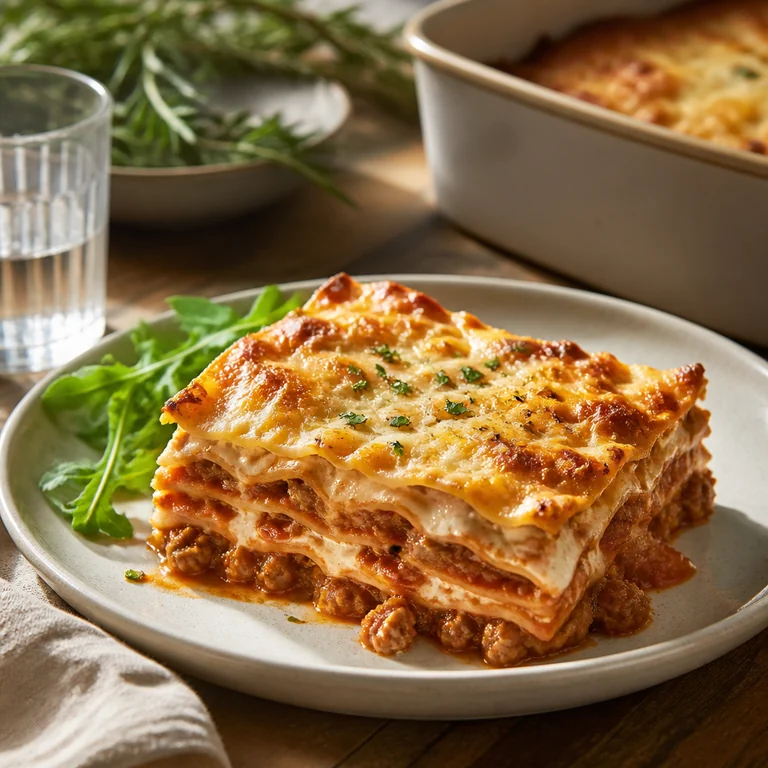

Sunday lasagna al forno
A proper Sunday ragu, simmered until it darkens, layered with béchamel and baked until the top sheet blisters and the edges catch on the dish.
Step 1
Warm the olive oil (2 tbsp) in a wide pan and soften the onion (1) with the garlic (3 cloves) until sweet, about 8 minutes. Turn up the heat, add the ground beef (1 lb) and brown it properly.
Coming up next
Your recipes become searchable by the things you actually remember. Because ingredients are stored as data rather than prose, you can look for a recipe by what is in it, how long it takes, or what you half-remember about it. Ask Sugo handles the vaguer end of that, "the pasta thing I saved in spring" is a reasonable question to ask.
What you own decides what gets suggested. Tell Sugo what is in your kitchen and it will rank your saved recipes by what you can actually cook tonight, rather than showing you the ones that need a shop first. That is the pantry side of it, and it is the feature that gets the most out of a big library.
Cooking gets its own screen. Cook mode takes a saved recipe and turns it into one readable step at a time with its timer attached, which is the state a recipe needs to be in when your hands are covered in flour.
Collections stay yours. Cookbooks group recipes the way you think about them (weeknights, the ones that reheat well, the things worth cooking for other people) and can be shared with the people you actually cook with.
Start smaller than you think
The most common mistake when moving to a new system is trying to import four hundred bookmarks on day one. Do not. Almost none of them are recipes you will cook.
Start with the ten you have genuinely made more than once. Add the next one when you find it, and one line of notes when you cook it. Within a couple of months you will have something more useful than the folder you spent three years filling, because every recipe in it will have earned its place.
The goal was never to save more recipes. It was to cook more of the ones you saved.
Sugo is free on iPhone, iPad and Mac, on Android, and in any browser at app.sugo.kitchen. If that sounds like your kitchen, download Sugo and we will be in touch.