How to cook once and eat three times
Cook once, eat three times: batch the slow part of dinner, stop before it commits to one dish, and finish it three ways without getting bored.
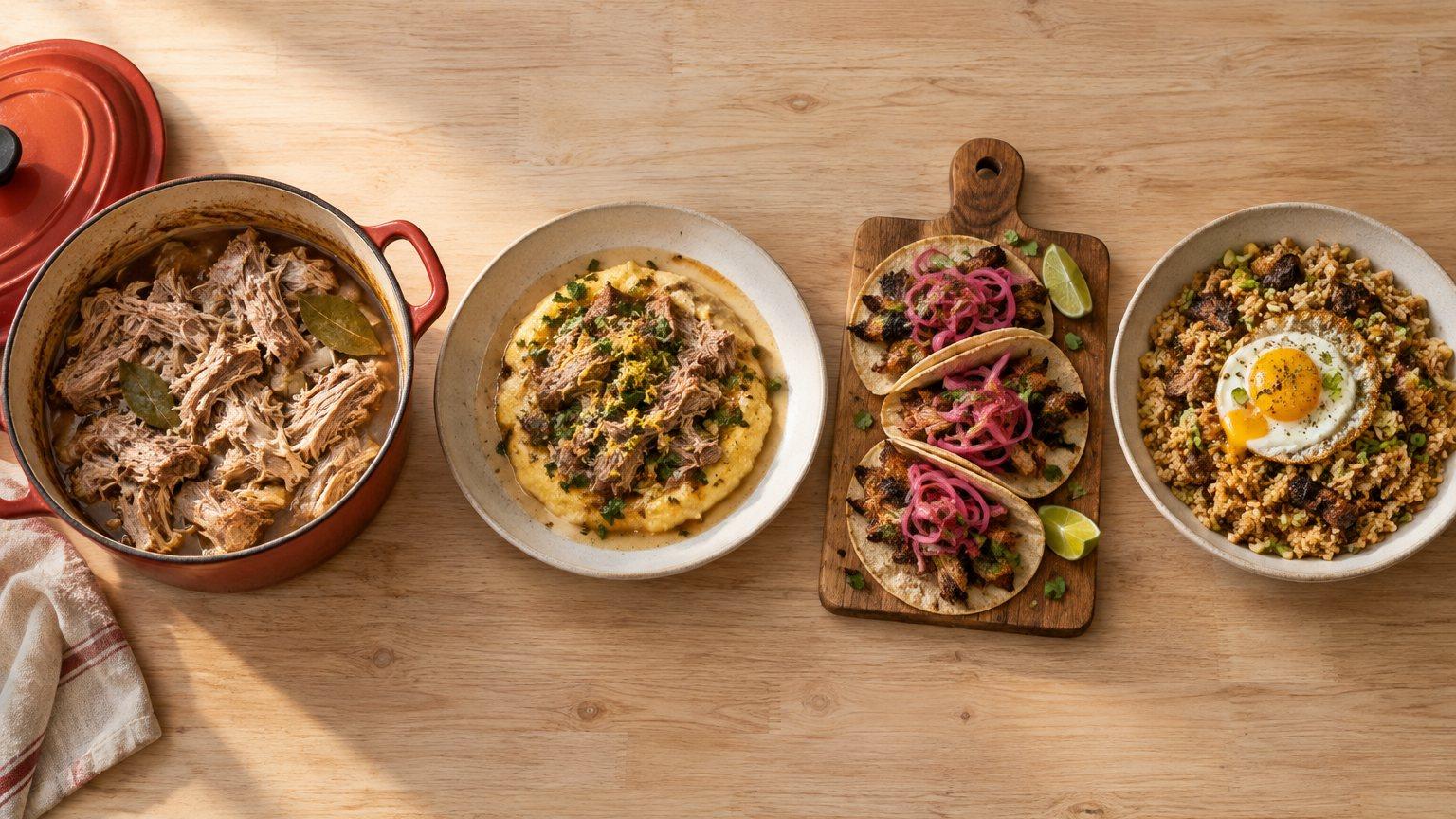
Cook the slow part of a dinner once, and stop before it turns into any particular dish. A pork shoulder braised for three hours with an onion, bay and salt can still become anything. Season it with cumin, chilli and vinegar on Sunday and it can only be Sunday's dinner, three times. So cook the base plain and keep the decisions for the night: each evening takes a portion, adds the acid, the herbs, the heat and the crunch, and turns it into a different meal in about twenty minutes.
The other half of the method is order. The first night eats the base closest to how it left the pot. Each later night moves it further away: shredded, then fried hard, then folded into rice or a soup. A hot pan forgives a base that has sat in the fridge for a couple of days, and soft reheated meat on the third night is the meal people give up on.
Why batch cooking gets boring
Most batch cooking goes wrong on the third portion of the same thing. You cook a big chilli on Sunday and portion it into five boxes. Monday is good, Tuesday is fine, and on Wednesday the box goes back in the fridge and you order something. Nothing was wrong with the cooking, and the fourth and fifth boxes still get binned a week later.
The usual advice is to change the sauce, and it helps less than it should, because the chilli has already decided what it is. Its cumin, its chilli and its tomato are cooked through every bean. You can put it on a baked potato or in a tortilla, and it is still chilli.
Batch a finished dish
- Seasoned and sauced on day one
- Every portion is the same meal, reheated
- Gets harder to face with each box
Batch a plain base
- Salted, nothing else decided
- Each night adds its own seasoning and texture
- Three different dinners from one pot
Batch the slow part, not the whole dinner
The test for what is worth cooking once is time. Pick something whose cooking is long because of the clock and quick in your hands: a braise, a pot of dried beans, a whole roast chicken, a big tray of roast roots. You would never start any of them at six on a Tuesday, which is the point. Cooked once at the weekend, they put a three-hour dinner within reach of a twenty-minute evening.
Things that cook fast are poor bases for this. A pan of rice is done in twenty minutes, and a stir-fry exists to be eaten straight out of the wok. Doubling them saves you very little and leaves you with the leftovers least worth eating.
Here is one pork shoulder, worked through a week. The base goes into a low oven on Sunday afternoon with an onion, a few cloves of garlic, two bay leaves, salt and enough water to come halfway up. Three hours later it falls apart, and it is still nothing in particular.
One braise, three dinners
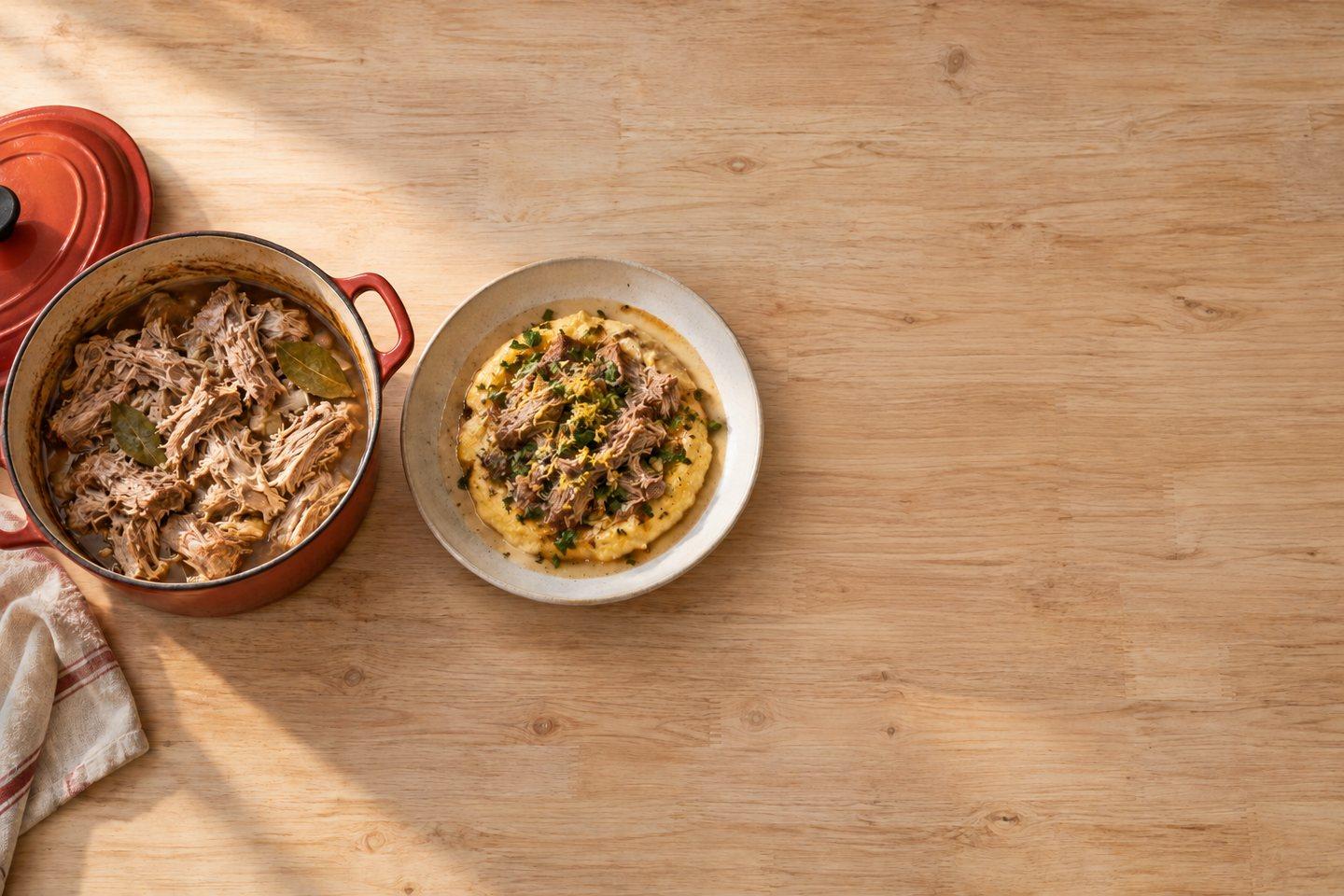
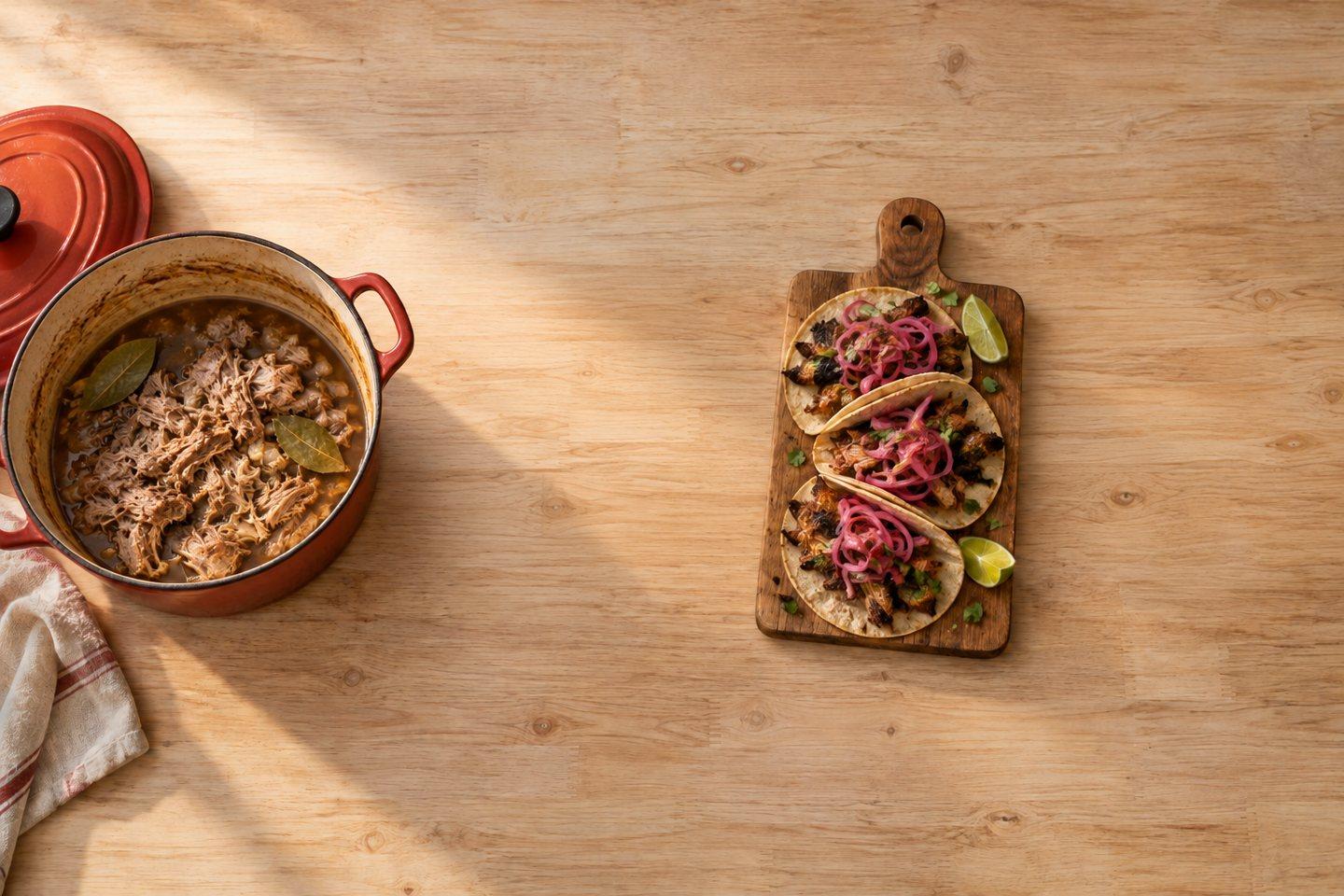
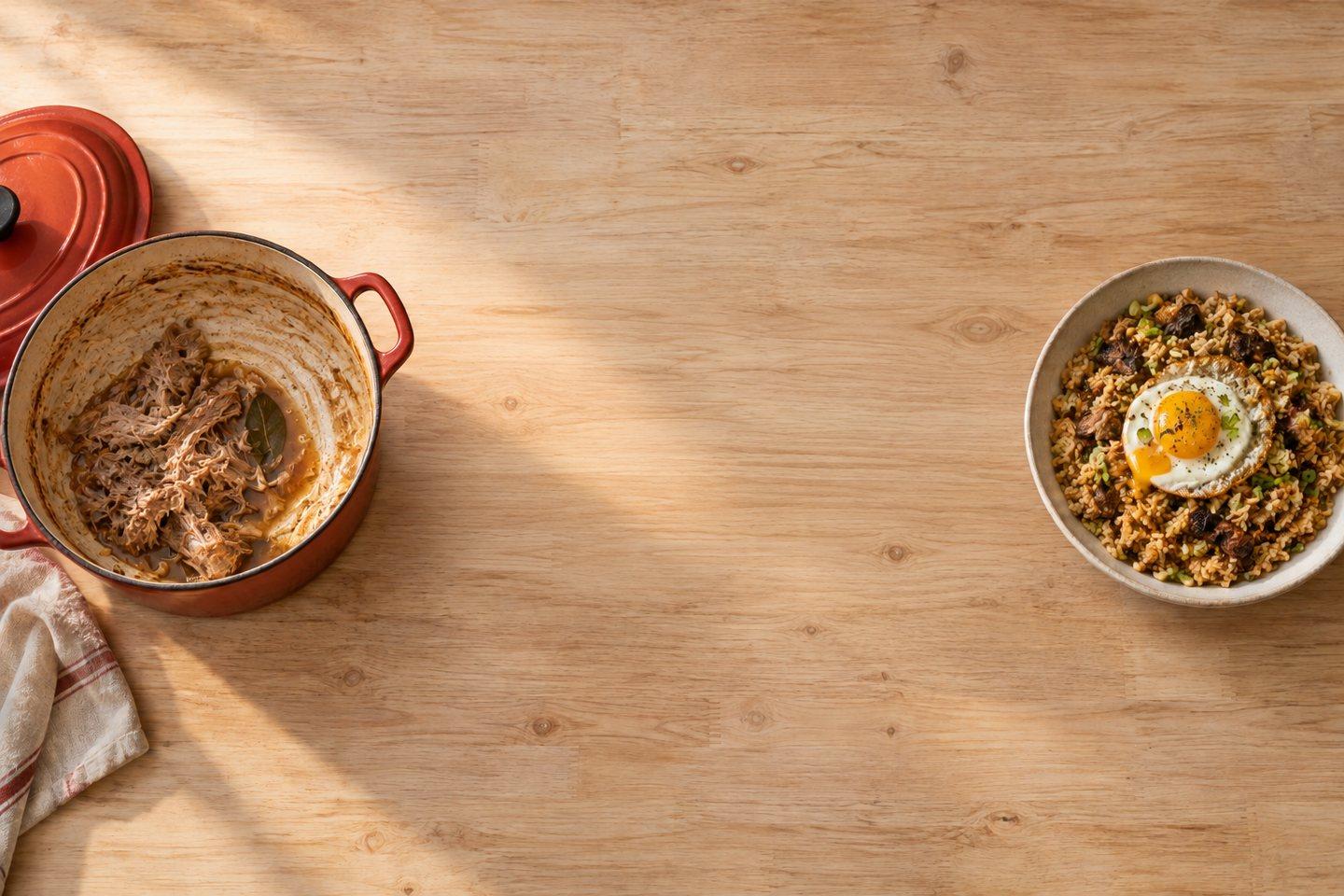
- Cooked once
- 3 h 55 min
- Each dinner from scratch
- 9 h 55 min
Pork shoulder braised with onion, garlic, bay and salt
3 hEvery one of those dinners contains three hours of cooking, and only Sunday paid for it. Tuesday and Thursday cost twenty minutes and fifteen. Without the Sunday pot you would braise pork for nine hours across three evenings, or more likely you would not cook those dinners at all. The braise also does most of its work on its own: the timing post separates minutes that need your hands from minutes that only need a clock, and almost all of a braise is the second kind.
Hold back what makes it a dish
A base stays flexible as long as it has only been salted. The ingredients that decide which dinner it becomes go in on the night, and most of them are the ones that fade or soften in the fridge anyway.
Acid
Lemon, lime, vinegar, pickles. Added on the night they taste bright; cooked into the pot on Sunday they have gone flat by Thursday.
Herbs and heat
Parsley, coriander, chilli, spring onion. Each one points the base toward a single cuisine, so keep them for the night that wants them.
Crunch and dairy
Breadcrumbs, nuts, a fried egg, cheese. Texture does not survive a night in a box, so it has to come from the pan on the night.
Keep the cooking liquid separate from the meat when you put it away. On Sunday it is the sauce. On Tuesday a couple of spoonfuls keep the shredded pork moist in the pan, and on Thursday a spoonful goes into the rice and nothing else. A base drowned in its own liquid can only be a stew.
Turn leftovers into a new meal: change the texture
Changing the seasoning makes a leftover taste different. Changing the texture makes it feel like a different dinner, and that is what decides whether you are glad to see it on Thursday.
So plan the three nights as a direction, from soft to crisp. Night one eats the base as it is: tender, in its juices, with something soft underneath. Night two pulls it apart and puts it in a hot pan until the edges catch. Night three breaks it down further and fries it hard, or puts it in a soup where it becomes one ingredient among several. Each step is a move away from the pot, and the further a dish is from the base, the less it matters that the base has been in the fridge for a few days.
The same order works for other bases. A pot of chickpeas goes from brothy with olive oil and lemon, to roasted until they crack, to blended with tahini. A roast chicken goes from carved, to shredded through a salad, to the carcass in a stock with noodles.
How much to cook for three nights
Cook for three dinners, not five. Three nights from one pot still feels like variety; by the fifth you are back to the boxes nobody wants to open. Space the nights out (Sunday, Tuesday, Thursday) so the base is never two days running, and keep the fridge guidance you already follow for cooked leftovers. If the week fills up, the third portion can go in the freezer, which braises and cooked beans take better than most dishes.
For two people, a two-kilo shoulder or a 500 g bag of dried chickpeas is about the right size for three dinners. For four, double it, or pick a second base and run them side by side.
Where Sugo comes in
The base is easy to cook and easy to forget. The pot goes into the fridge on Sunday, and by Wednesday nobody remembers it is supposed to be Thursday's fried rice. The method holds up when you write the three dinners down together, as one decision.
A meal plan in Sugo is the place for that: the braise on Sunday, the tacos on Tuesday and the rice on Thursday, all from recipes you have saved, visible to everyone in the household on famiglia. The plan rolls the week into one shopping list, with what is already in your pantry taken off it.
This week

Sugo does not know that Tuesday's tacos are made from Sunday's pork. A plan holds dishes, not what one dish leaves for the next, so if the taco recipe asks for a pork shoulder, that pork shoulder goes on the list and you strike it off yourself. It also will not suggest finishes for a base you have cooked. Choosing the three directions is still your job, and a meal plan that survives a real week has more on fitting them around the nights you will not cook.
Questions people ask
What does cook once, eat three times mean?
It means cooking one large base on a day you have time, then using it for three different dinners across the week. The base is usually something slow, such as a braise, a pot of beans or a roast chicken. Each night takes a portion and finishes it into a separate dish with its own seasoning and texture, so you do the long cooking once and eat it three ways.
How do you batch cook without getting bored?
Batch a plain base instead of a finished dish. Season it with salt only, keep acid, herbs, chilli and anything crunchy for the night you eat it, and change the texture as the week goes on: soft on the first night, crisped on the second, fried or blended on the third. Three nights from one pot is usually the limit before it starts to feel repetitive.
What are the best foods to batch cook as a base?
Foods that take a long time to cook but little attention: braised pork shoulder or beef, dried beans and chickpeas, a whole roast chicken, a tray of roast root vegetables. They are the dinners you would not start on a weeknight, so cooking them once at the weekend saves the most. Quick foods like rice or stir-fries gain little from being cooked ahead.
Is it better to batch cook components or whole meals?
Components, if you want different dinners. A finished meal portioned into boxes is the same meal every time, and it gets harder to face with each one. A plain component can go three directions. Whole meals still make sense for the freezer, where you want a full dinner ready to reheat on a night you cannot cook at all.
Cooking once for three dinners
Pick a slow base
A braise, a pot of beans, a roast chicken. Long on the clock, short in your hands.
Season it with salt only
Keep the acid, herbs, heat and crunch for the night.
Store the liquid separately
Sauce on night one, a spoonful on nights two and three.
Go from soft to crisp
As it is, then shredded and crisped, then fried hard or blended.
Cook for three nights
With a gap between them, and the freezer for a portion the week cannot reach.
The Sunday pot is the easy part. The work is in the three short evenings after it: decide each one on the day, and take each one a step further from the pot.
Sugo is free on iPhone, iPad and Mac, on Android, and in any browser at app.sugo.kitchen. If there is a pot of something slow in your fridge and three weeknights ahead of it, download Sugo.
